


Summer Deer Mortality Attributed to Common Virus


 Nashville, TN – Tennessee Wildlife Resources Agency (TWRA) offices are receiving reports of dead deer in scattered areas of the state. The timing and details of the reports are all indicative of hemorrhagic disease (HD).
HD occurs at varying levels of severity each year in Tennessee’s deer herd. The catch-all term for this disease is hemorrhagic disease (HD), and epizootic hemorrhagic disease (EHD) and bluetongue are the closely related viruses that fall under the umbrella of HD.
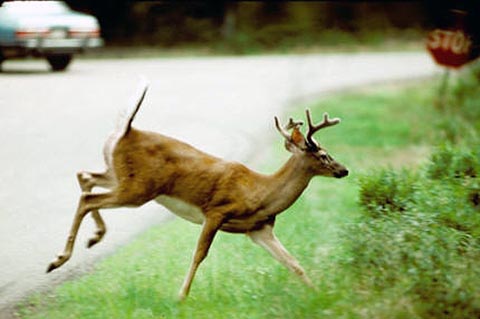
TWRA says that recent reports of dead deer being found is indicative of Hemorrhagic Disease.
So far this year, reports are predominantly coming from East Tennessee, and based on the volume of reports it appears to be above average in severity.
According to officials in Athens, GA, at the Southeastern Cooperative Wildlife Disease Study (SCWDS), the outbreak being experienced appears to be a part of a larger multi-state outbreak involving several nearby states.
Reports to TWRA offices indicate mortality of deer in at least 20 counties with more expected as the season progresses. The last major outbreak of HD in Tennessee was in 2007 and involved virtually all of the state.
“So far the intensity of the outbreak seems to be localized,” said Roger Applegate, Wildlife Health Program Leader for TWRA. “We don’t anticipate this outbreak to rival that of 2007, but it is still early and we’re actively monitoring the situation.”HD is caused by a virus that is transmitted to deer from biting midges or “no-seeums.”
It is not transmitted from deer to deer by contact. The virus causes fever, respiratory distress, and swelling of the neck or tongue. Not all deer exposed to the virus will die, but those that do usually do so within 5 to 10 days of exposure in or near water as they seek to cool their bodies from the fever. Incidence of HD usually peaks around mid-September and is usually done by mid-October with the onset of cold weather.
“Although some of the clinical symptoms are similar, it is important to not confuse HD with CWD (Chronic Wasting Disease),” said James Kelly, TWRA Deer Management Program Leader. “Unlike CWD, HD is a virus and deer can survive infection. It comes and goes at varying levels of severity much like the flu does for humans. CWD, on the other hand, is actually a much greater concern because the causative agents known as prions persist in the environment and in deer populations indefinitely.”
Fortunately, CWD has not been detected in Tennessee, and intensive surveillance will continue this fall by TWRA biologists and agency partners for this neurological and always fatal disease.
For more information on CWD please visit cwd-info.org


Comments
Feel free to leave a comment...
and oh, if you want a pic to show with your comment, go get a gravatar!
You must be logged in to post a comment.