


Eliminating Blood Test may increase availability of Donor Hearts


American Heart Association Rapid Access Journal Report
 Dallas, TX – A blood test that leads to the rejection of donor hearts may be unnecessary in predicting whether a heart transplant will succeed or fail, according to new research in Circulation: Heart Failure, an American Heart Association journal.
“Heart transplantation is an incredible therapy for patients with end-stage heart failure, but there are only 2,000-2,400 transplants each year. A lot of focus has been on finding ways to sign up more people as organ donors, but there is also a problem in that only an average of one in three donor hearts are placed,” said Snehal R. Patel, M.D., senior author of the study and assistant professor of medicine at Montefiore Medical Center, Albert Einstein College of Medicine, in the Bronx, New York.
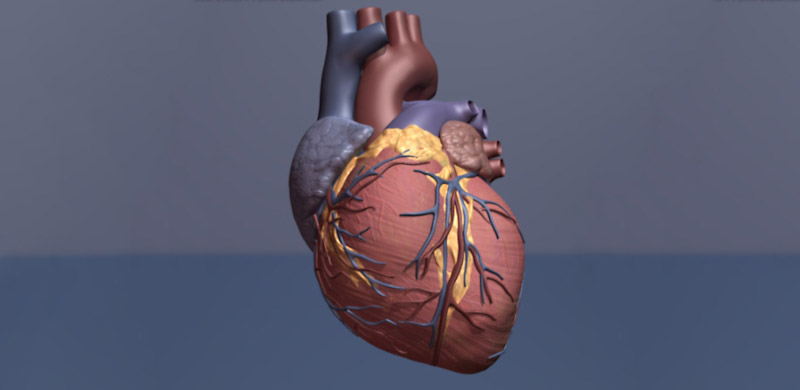
Heart Illustration. (American Heart Association)
Many transplant centers routinely reject hearts if the donor’s blood test reveals elevated levels of troponin I, a protein found in heart muscle that enters the bloodstream when there is a heart attack or other heart muscle damage. Donors with previous heart disease are automatically excluded.
“If the heart looks okay but troponin I is elevated, many centers will reject the organ out of concern that this marker indicates dysfunction of the heart that will become evident after the stress of the transplant process. We looked at whether this is true,” Patel said.
In the largest study of its kind and the first to use a national registry, researchers examined the outcomes of 10,943 adult (at least 18 years of age) heart transplant recipients in the national database of the United Network of Organ Sharing. Each donor heart had normal pumping function.
Researchers found:
- No association between donor troponin I levels and the likelihood of death within the first year after transplant;
- No significant difference in survival at 30 days, 1 year, 3 years, or 5 years regardless of donor troponin I levels;
- No difference in the proportion of transplant recipients who developed primary graft failure, a catastrophic event marked by severe loss of pumping function in the donor heart that occurs within the first 30 days after transplant; and
- No difference in the proportion who developed cardiac allograft vasculopathy, a rapid form of heart disease that can occur in donor hearts and limits their long-term success.
“Our research shows that transplant centers should not exclude donor hearts based solely on elevated troponin I if the organ is otherwise suitable. At our institution it has already changed how we evaluate donors, and I think this data will lead to changes nationwide,” Patel said.
Co-authors are Shivank Madan, M.D., M.H.A.; Omar Saeed, M.D.; Jooyoung Shin, M.D.; Daniel Sims, M.D.; Daniel Goldstein, M.D.; Ileana Piña, M.D., M.P.H. and Ulrich Jorde, M.D. Author disclosures are on the manuscript.
Additional Resources:
- View the manuscript online. Editorial available here.
- Rise Above Heart Failure
- Devices and Surgical Procedures to Treat Heart Failure
- Follow AHA/ASA news on Twitter @HeartNews.


Comments
Feel free to leave a comment...
and oh, if you want a pic to show with your comment, go get a gravatar!
You must be logged in to post a comment.