


What is known, not known about Heart Muscle Diseases in Children
June 17, 2019
 Dallas, TX – A new scientific statement from the American Heart Association focuses on Cardiomyopathies (heart muscle diseases) in children and provides insight into the diagnosis and treatment of the diseases as well as identifying future research priorities. It will be published in the American Heart Association’s journal Circulation.

Cardiomyopathies (heart muscle diseases) in children are the focus of a new scientific statement from the American Heart Association that provides insight into the diagnosis and treatment of the diseases as well as identifying future research priorities. (American Heart Association)
Genomic Medicine may one day revolutionize Cardiovascular Care
June 20, 2018
American Heart Association
Dallas, TX – A new scientific statement from the American Heart Association summarizes the state-of-the-science of genomic medicine — the study of the health effects of the molecular interactions of a person’s unique genes — for studying cardiovascular traits and disorders and for therapeutic screening.
Genomic medicine could enable doctors to make predictions about people’s health, from the likelihood of developing heart disease or stroke to the severity of disease, as well as medications for treatment. (American Heart Association)
American Heart Association says Drug therapy, LVAD helps Severe Heart Failure Patients recover function
November 17, 2016
American Heart Association Meeting Report
New Orleans, LA – More than a third of advanced heart failure patients treated with a combination of an artificial heart assist device, called a left ventricular assist device, or LVAD, and intensive drug therapy have recovered their heart function enough to allow removal of the LVAD device, according to preliminary results of an ongoing study presented at the American Heart Association’s Scientific Sessions 2016.
Advanced heart failure patients who are treated with an artificial heart assist device combined with intensive drug therapy may recover their heart function (American Heart Association)
Eliminating Blood Test may increase availability of Donor Hearts
June 23, 2016
American Heart Association Rapid Access Journal Report
Dallas, TX – A blood test that leads to the rejection of donor hearts may be unnecessary in predicting whether a heart transplant will succeed or fail, according to new research in Circulation: Heart Failure, an American Heart Association journal.
“Heart transplantation is an incredible therapy for patients with end-stage heart failure, but there are only 2,000-2,400 transplants each year. A lot of focus has been on finding ways to sign up more people as organ donors, but there is also a problem in that only an average of one in three donor hearts are placed,” said Snehal R. Patel, M.D., senior author of the study and assistant professor of medicine at Montefiore Medical Center, Albert Einstein College of Medicine, in the Bronx, New York.
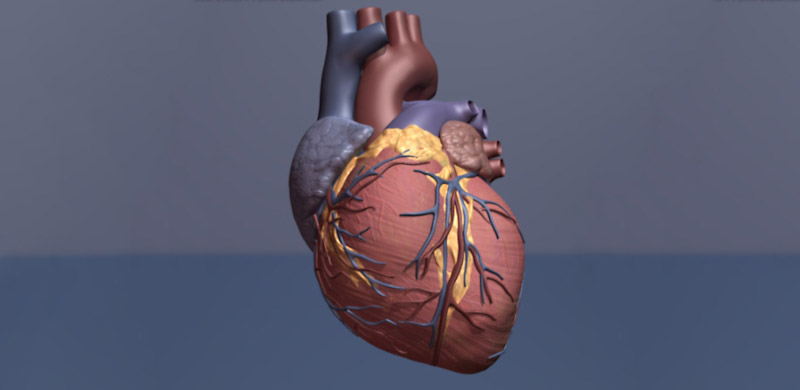
Heart Illustration. (American Heart Association)
American Heart Association says 3D image may provide better size match for Child Heart Transplants
November 17, 2015
American Heart Association Meeting Report
Orlando, FL – A new 3D computer modeling system may significantly improve a surgeon’s ability to select the best sized donor heart for children receiving heart transplants, according to research presented at the American Heart Association’s Scientific Sessions 2015.
Transplant centers currently assess compatibility of a potential donor heart by comparing the donor weight to the recipient weight and then picking an upper and lower limit based on the size of the patient’s heart on chest X-ray. But the assessment is not precise and variations in size and volume can have a major effect on the recipient’s outcome.

Models of multiple children’s hearts who were born with congenital heart defects, used for surgical planning. (Cardiac 3D Print Lab, Phoenix Children’s Hospital Heart Center)
American Heart Association report shows Wealthiest not Sickest Patients may have edge in Organ Transplants
November 14, 2015
American Heart Association Meeting Report: Abstract 15991
Orlando, FL – Registering with more than one organ transplant center appears to give an edge to wealthy patients over those with the most medical need, according to research presented at the American Heart Association’s Scientific Sessions 2015.
Researchers studied the national database of organ donors from 2000 to 2013 and found that patients who simultaneously listed at more than one center had higher transplant rates, lower death rates while waiting, were wealthier and were more likely to be insured.

Raymond Givens, M.D., Ph.D. – Advanced Heart Failure and Transplant Fellow, Columbia University Medical Center, New York. (American Heart Association)
American Heart Association reports that it’s OK to limit pre-dental procedure Antibiotics to high risk Heart Patients
June 17, 2012
Dallas, TX – The incidence of infective endocarditis among dental patients in Olmsted County, MN did not increase after new guidelines called for giving preventive antibiotics before dental procedures only to those at greatest risk of complications, according to independent research published in Circulation, an American Heart Association journal.
Infective endocarditis Description: External link is a bacterial infection of the heart lining, heart valve or blood vessel. [Read more]


