


Eliminating Blood Test may increase availability of Donor Hearts
June 23, 2016
American Heart Association Rapid Access Journal Report
 Dallas, TX – A blood test that leads to the rejection of donor hearts may be unnecessary in predicting whether a heart transplant will succeed or fail, according to new research in Circulation: Heart Failure, an American Heart Association journal.
“Heart transplantation is an incredible therapy for patients with end-stage heart failure, but there are only 2,000-2,400 transplants each year. A lot of focus has been on finding ways to sign up more people as organ donors, but there is also a problem in that only an average of one in three donor hearts are placed,” said Snehal R. Patel, M.D., senior author of the study and assistant professor of medicine at Montefiore Medical Center, Albert Einstein College of Medicine, in the Bronx, New York.
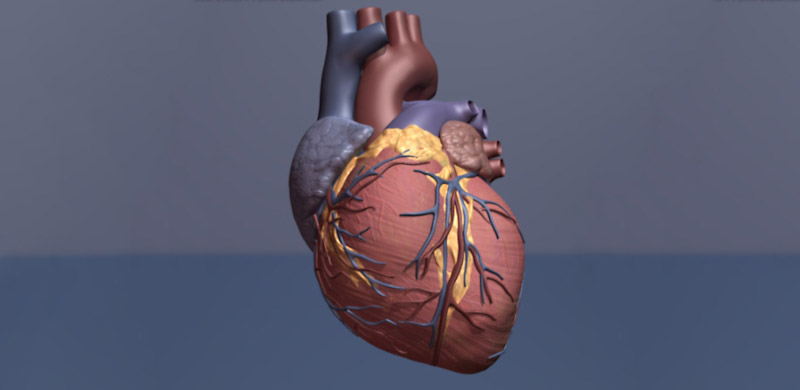
Heart Illustration. (American Heart Association)
American Heart Association reports Hispanics/Latinos at higher risk for Cardiac Dysfunction, Heart Failure
April 7, 2016
American Heart Association Rapid Access Journal Report
Dallas, TX – Hispanics/Latinos have higher rates of cardiac dysfunction but are rarely aware they have the heart-pumping problem that can lead to heart failure, according to new research in the American Heart Association’s journal Circulation: Heart Failure.
Researchers found that about half of the 1,818 adults in their study of middle-aged and older Hispanics/Latinos had cardiac dysfunction, yet fewer than 1 in 20 participants knew they had a problem.
Heart Illustration. (American Heart Association)
Statin use differs among Hispanic Adults at risk for Heart Disease
April 4, 2016
American Heart Association Rapid Access Journal Report
Dallas, TX – In the United States, adults of different Hispanic/Latino backgrounds, at high risk for heart disease, varied significantly in their use of widely-prescribed cholesterol-lowering medications known as statins, according to new research in the Journal of the American Heart Association. The difference was based on whether or not they had health insurance.
“These findings have important implications for preventing disparities in cardiovascular outcomes within the growing U.S. Hispanic/Latino population,” said study lead author Dima M. Qato, Pharm.D., M.P.H., Ph.D., assistant professor of pharmacy systems, outcomes and policy at the University of Illinois in Chicago.

Prepping the patient to draw blood for a cholesterol test. (American Heart Association)
American Heart Association reports Potassium-Rich Foods cut Stroke, Death Risks among Older Women
September 5, 2014
Dallas, TX – Postmenopausal women who eat foods higher in potassium are less likely to have strokes and die than women who eat less potassium-rich foods, according to new research in the American Heart Association’s journal Stroke.
“Previous studies have shown that potassium consumption may lower blood pressure. But whether potassium intake could prevent stroke or death wasn’t clear,” said Sylvia Wassertheil-Smoller, Ph.D., study senior author and distinguished university professor emerita, department of epidemiology and population health at Albert Einstein College of Medicine, Bronx, NY.

Blood pressure monitoring workplace
American Heart Association says Young Hispanics often Obese, at higher risk for Heart Diseases
July 15, 2014
Dallas, TX – Obesity is common among U.S. Hispanics and is severe particularly among young Hispanics, according to research in the Journal of the American Heart Association (JAHA).
The first large-scale data on body mass index (BMI) and cardiovascular disease risk factors among U.S. Hispanic/Latino adult populations suggests that severe obesity may be associated with considerable excess risk for cardiovascular diseases.

Blood pressure cuff. (American Heart Association)


