


American Heart Association gives Seven Healthy Heart measures may reduce Heart Failure Risk
December 26, 2015
American Heart Association Rapid Access Journal Report
 Dallas, TX – People scoring well on the American Heart Association’s Life’s Simple 7 checklist for a healthy heart are less likely to develop heart failure, a condition that reduces blood and oxygen flow to the body, according to new research in the American Heart Association’s journal Circulation: Heart Failure.
Life’s Simple 7 encompasses seven measures that people can use to rate their heart health and take steps to improve it. The measures are: manage blood pressure, control cholesterol, reduce blood sugar, get physically active, eat better, lose weight and stop smoking.
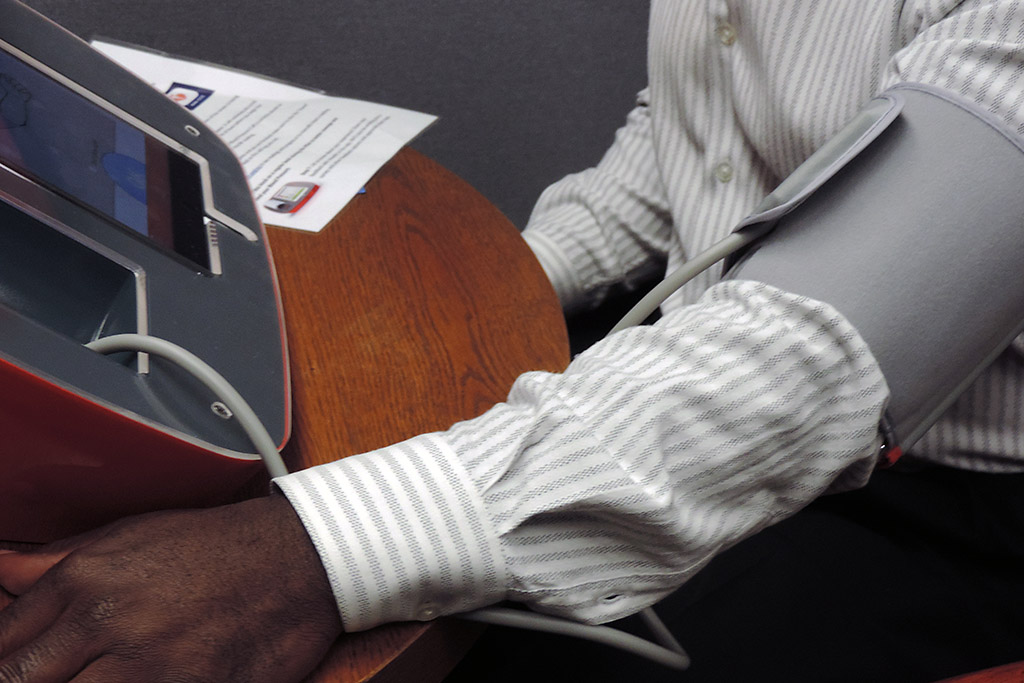
A man checking his blood pressure at an office kiosk. (American Heart Association)
American Heart Association says new reversible drug shows early promise in preventing dangerous Clots
December 22, 2015
American Heart Association Rapid Access Journal Report
Dallas, TX – A new drug that protects against dangerous blood clots in patients undergoing procedures such as angioplasty to restore blood flow through the coronary arteries, appears safe, fast, and the effects are uniquely reversible, according to early testing described in the American Heart Association journal: Arteriosclerosis, Thrombosis and Vascular Biology.
Antiplatelet drugs currently available to patients carry an increased risk of bleeding.

A uniquely acting antiplatelet agent, PZ-128, appears to be safe and fast for preventing blood clots and its effects are reversible, reducing risk for excessive bleeding. (American Heart Association)
New statistics from American Heart Association shows one of every three U.S. Deaths caused by Cardiovascular Disease
December 18, 2015
Dallas, TX – One of every three deaths in the U.S. in 2013 were from heart disease, stroke and other cardiovascular diseases, while heart disease and stroke were the No. 1 and No. 2 killers worldwide, according to American Heart Association’s 2016 Heart Disease and Stroke Statistics Update.
Produced since 1958, the update is created from the most-recent data available and compiled by the AHA, the National Institutes of Health, the Centers for Disease Control and Prevention and other government sources.

Brain Clot. (American Heart Association)
American Heart Association says short bursts of high-intensity exercise does more for Type 2 Diabetes
November 18, 2015
American Heart Association Meeting Report
Orlando, FL – Short bursts of high-intensity exercise improved cholesterol, blood sugar and weight among Type 2 diabetes patients more than 30 minutes of sustained, lower-intensity exercise, according to research presented at the American Heart Association’s Scientific Sessions 2015.
Researchers found that after three months of high-intensity exercise in 10-minute bursts done three times per day, five days a week, led to an average 0.82 percent decrease in three-month blood sugar patterns compared with just 0.25 percent among those who performed more sustained, lower-intensity exercise also five times per week.

Short bursts of high-intensity exercise improved cholesterol, blood sugar and weight among Type 2 diabetes patients more than 30 minutes of sustained, lower-intensity exercise.(American Heart Association)
American Heart Association reports Obese Kids young as age 8 show signs of Heart Disease
November 16, 2015
Orlando, FL – Imaging tests of obese children — some as young as 8 years old — showed signs of significant heart disease and heart muscle abnormalities, according to research presented at the American Heart Association’s Scientific Sessions 2015.
Comparing 20 obese kids with 20 normal-weight kids, researchers found that obesity was linked to 27 percent more muscle mass in the left ventricle of their hearts and 12 percent thicker heart muscles – both signs of heart disease.
Child weighing himself on a scale. (American Heart Association)
American Heart Association says the No. 1 Killer is Invisible to most Women
November 9, 2015
American Heart Association Meeting Report
Orlando, FL – Even though heart disease and stroke are the No. 1 killer of women in the U.S., most women say they don’t have a personal connection to cardiovascular disease, according to research presented at the American Heart Association’s Scientific Sessions 2015.
A 2014 nationally representative survey of 1,011 adult women found that those who know another woman with heart disease are 25 percent more likely to be concerned about it for themselves and 19 percent more likely to bring up heart health with their doctors. The survey was developed and conducted by the Women’s Heart Alliance.
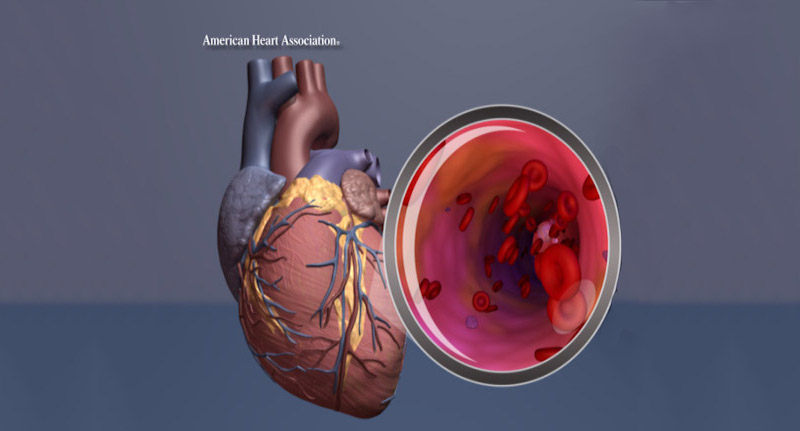
Heart illustration with artery close up. (American Heart Association)
American Heart Association says Mobile Technology may help people improve Health Behaviors
August 21, 2015
Dallas, TX – Smartphone applications and wearable sensors have the potential to help people make healthier lifestyle choices, but scientific evidence of mobile health technologies’ effectiveness for reducing risk factors for heart disease and stroke is limited, according to a scientific statement from the American Heart Association, published in the association’s journal Circulation.
The new statement reviewed the small body of published, peer-reviewed studies about the effectiveness of mobile health technologies (mHealth) for managing weight, increasing physical activity, quitting smoking and controlling high blood pressure, high cholesterol and diabetes.

Vegetables at the market. (American Heart Association)
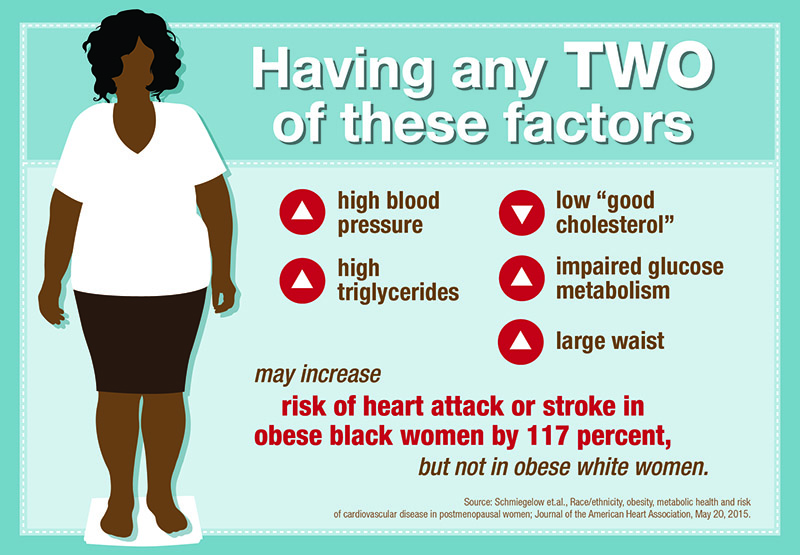
American Heart Association says Metabolic Abnormalities may increase Cardiovascular risk more in Black Women than in White Women
May 25, 2015
Large waistline, cholesterol disorders and other metabolic abnormalities may increase the relative risk of cardiovascular disease more among black women than among white women.
Dallas, TX – Large waistline, cholesterol disorders and other metabolic abnormalities may increase the risk of cardiovascular disease more among black women than among white women, according to new research in Journal of the American Heart Association.
Previous studies have focused primarily on white participants and found that obesity without a clustering of at least three metabolic disorders (metabolic syndrome) was not associated with increased cardiovascular disease risk.
American Heart Association, two other major organizations issue new recommendations for treating patients with High Blood Pressure and Cardiovascular Disease
April 8, 2015
Dallas, TX – A new scientific statement issued jointly by three medical organizations and published in the American Heart Association’s journal Hypertension, addresses how low to aim when treating patients with high blood pressure who also have vascular diseases.
The document provides an up-to-date summary on treating hypertension in patients who have both high blood pressure and have had a stroke, heart attack or some other forms of heart disease, said Elliott Antman, M.D., President of the American Heart Association and professor of medicine at Harvard Medical School.
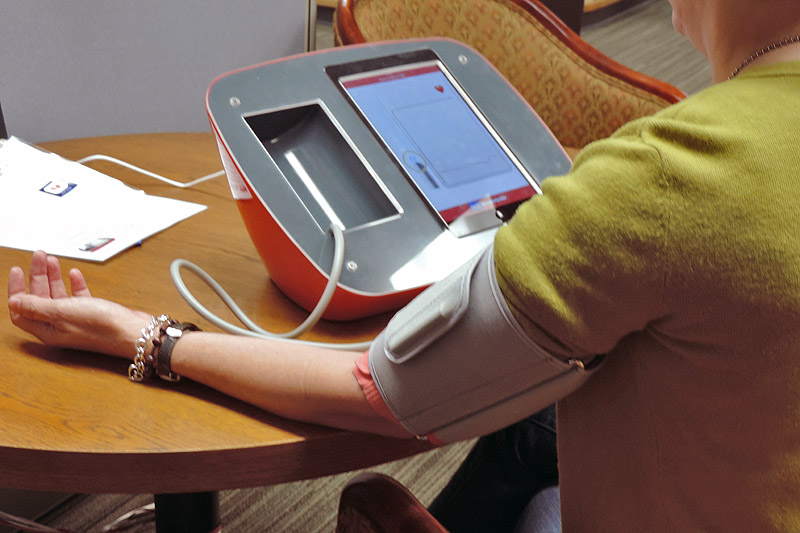
Blood pressure monitoring. (American Heart Association)
American Heart Association says poor response to Cholesterol Drugs may indicate blocked Arteries
March 14, 2015
Dallas, TX – If your “bad” cholesterol level stays the same or increases after you take statin drugs, you may have more blocked arteries than people whose levels drop, according to research in the American Heart Association journal Arteriosclerosis, Thrombosis and Vascular Biology.
Low density lipoprotein (LDL) cholesterol is considered the “bad” cholesterol because it contributes to plaque buildup, thick, hard deposit that can clog arteries and make them less flexible. [Read more]


