American Heart Association reports Recreational, Commuter Biking linked to Lower Cardiovascular Disease Risk
November 2, 2016
American Heart Association Rapid Access Journal Report
 Dallas, TX – People who bike regularly, either for pleasure or as a way to commute, appear to have a lower risk of cardiovascular disease, according to two separate studies published simultaneously in the American Heart Association’s journal Circulation and Journal of the American Heart Association, the AHA/ASA’s Open Access Journal.
While structured cycling as part of a formal workout routine is already known to guard against cardiovascular illness, little is known about the effects of habitual biking done for leisure or as a way to commute.

People who bike regularly, either recreationally or as a way to commute, appear to have a lower risk of cardiovascular illness, according to studies conducted in Denmark and Sweden.
American Heart Association says Digestive byproduct may predict greater Risk of Death among PAD Patients
October 30, 2016
American Heart Association Rapid Access Journal Report
Dallas, TX – Patients with high blood levels of a digestive byproduct and narrowing of the arteries away from the heart (peripheral artery disease or PAD) were significantly more likely to die within five years than PAD patients with lower levels, according to new research in Journal of the American Heart Association, the Open Access Journal of the American Heart Association/American Stroke Association.
The digestive byproduct, trimethylamine N-oxide (TMAO) is produced by gut bacteria breaking down red meat, eggs, and other meat products found in the traditional Western diet.
Patients with narrowed peripheral arteries and high blood levels of a digestive byproduct were significantly more likely to die during a five-year study than were peripheral artery disease (PAD) patients with lower levels of the digestive byproduct. (American Heart Association)
American Heart Association says Taking Meds after Heart Procedures may boost trouble-free Survival Rate
October 25, 2016
American Heart Association Rapid Access Journal Report
Dallas, TX – Medications matter, but if you are a heart patient who doesn’t take them as prescribed you may have a lower trouble-free survival rate and heart bypass surgery may be more beneficial than percutaneous coronary interventions (PCI or stenting), according to new research in the American Heart Association’s journal Circulation.
Coronary artery bypass surgery redirects blood flow to the heart around clogged heart arteries.

Heart bypass patients appeared to be more resistant than PCI patients to the negative effects of not taking prescribed medication. (American Heart Association)
Sleep disorders may influence heart disease risk factors says American Heart Association
September 26, 2016
American Heart Association Scientific Statement
Dallas, TX – Sleep problems including sleeping too little or too long, may be linked to a variety of factors that may raise the risk for cardiovascular diseases, according to a new American Heart Association scientific statement published in the American Heart Association journal Circulation.
The first statement by the American Heart Association on sleep and heart health outlines what we currently know about sleep irregularities and cardiovascular-related risk factors, including obesity, Type 2 diabetes, heart disease and atherosclerosis, arrhythmias, high blood pressure, stroke, unhealthy levels of triglycerides and cholesterol.

Research linking sleep problems to obesity and diabetes is robust, but longer studies measuring impact on actual weight are needed. (American Heart Association)
American Heart Association reports Children Score Low on Cardiovascular Health Measures
August 12, 2016
American Heart Association Scientific Statement
Dallas, TX – Proactive strategies for promoting good heart health should begin at birth, yet most American children do not meet the American Heart Association’s definition of ideal childhood cardiovascular health, according to a new scientific statement published in the American Heart Association journal Circulation.
“Instead of taking a wait-and-see approach by treating disease later in adulthood, we should help children maintain the standards of ideal cardiovascular health that most children are born with,” said Julia Steinberger, M.D., M.S., lead author of the new statement, professor in pediatrics and director of pediatric cardiology at the University of Minnesota in Minneapolis.

Most children are born with ideal cardiovascular health and promoting good heart health should begin at birth. (American Heart Association)
American Heart Association says Heart Disease, Stroke Risk factors may increase in severity before Menopause
August 6, 2016
American Heart Association Rapid Access Journal Report
Dallas, TX – The severity of key risk factors for heart disease, diabetes and stroke appears to increase more rapidly in the years leading up to menopause, rather than after, according to new research in Journal of the American Heart Association, the Open Access Journal of the American Heart Association/American Stroke Association.
The study also found that this pattern of rapidly increasing risk factors before menopause appears to be more pronounced among African-American women.
As women go through menopause, doctors and other care providers can use this “teachable moment” to emphasize the importance of diet and exercise in reducing cardiovascular disease risk. (American Heart Association)
American Heart Association New Initiative aims to reduce repeat Heart Attacks
August 4, 2016
Dallas, TX – Every 42 seconds someone in the U.S. has a heart attack. Just after noon on March 26th, 2016, Julie Kubala, become one of those statistics.
She’s working now to ensure she doesn’t become a different one – about 21 percent of women and 17 percent of men age 45 and older will have another heart attack within five years of their first one.
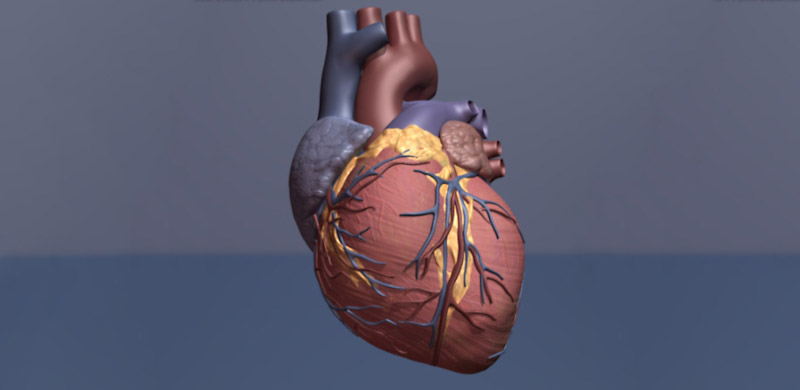
Heart Illustration. (American Heart Association)
American Heart Association says Fluctuations in “Bad” Cholesterol may be linked to worse Brain Health
July 19, 2016
American Heart Association Rapid Access Journal Report
Dallas, TX – Greater fluctuations in “bad” cholesterol levels may be linked to worse cognitive function in elderly adults, according to new research in the American Heart Association’s journal Circulation.
In a study of European adults age 70 to 82 years old, researchers found that greater fluctuations in low-density lipoprotein cholesterol (LDL), or “bad” cholesterol, are associated with lower cognitive performance.
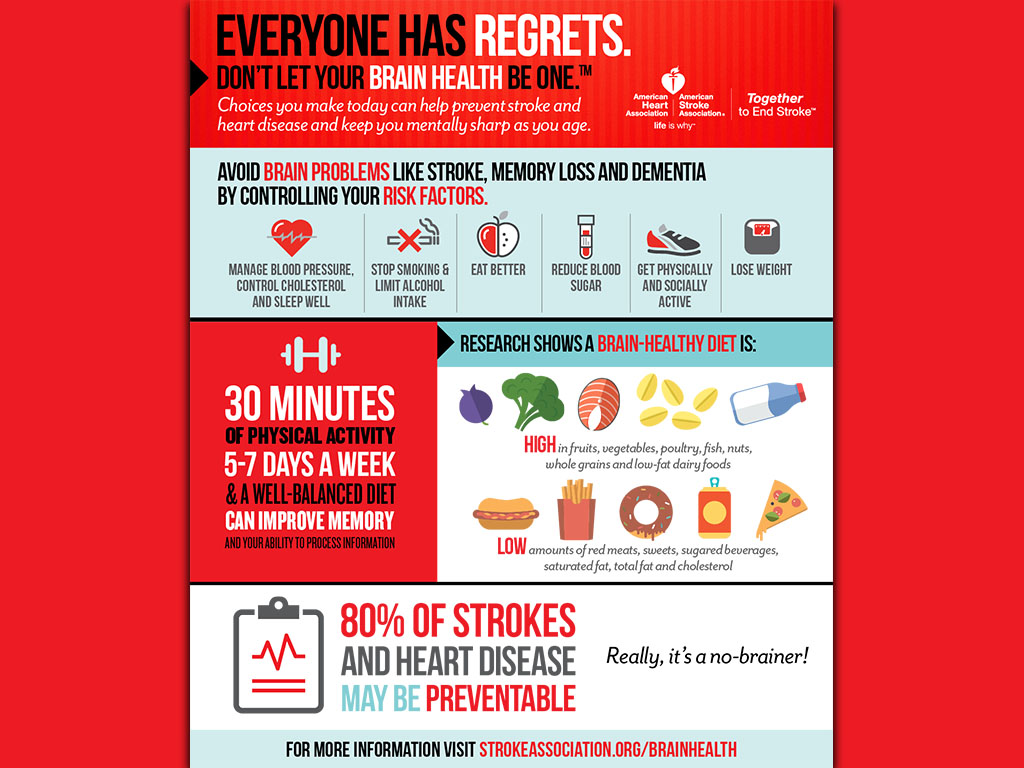
The negative effect from fluctuations was found regardless of average bad cholesterol levels or use of cholesterol-lowering drugs. (American Heart Association)
American Heart Association says Blood Glucose Health is decreasing in Obese Adults; increasing risks for Type 2 Diabetes, Cardiovascular Complications
July 14, 2016
American Heart Association Rapid Access Journal Report
Dallas, TX – Blood glucose health is deteriorating in obese adults, despite overall progress in lowering blood pressure and cholesterol levels, which may raise the risk of Type 2 diabetes and cardiovascular complications, according to new research in Journal of the American Heart Association, the Open Access Journal of the American Heart Association/American Stroke Association.
Researchers said their findings suggest that controlling weight in obese adults to reduce the risk of developing Type 2 diabetes should be a public health priority. (American Heart Association)
American Heart Association reports Men may face high lifetime risk of Sudden Cardiac Death
July 3, 2016
American Heart Association Rapid Access Journal Report
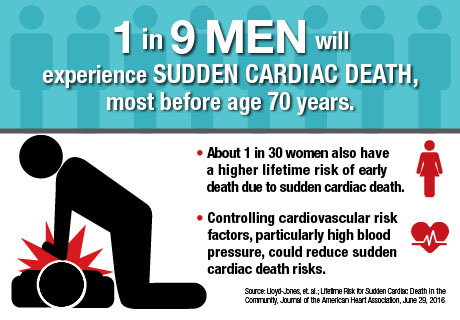
Dallas, TX – About one in every nine men will experience sudden cardiac death, most before age 70, as well as about one in 30 women, according to research published in the Journal of the American Heart Association, the Open Access Journal of the American Heart Association/American Stroke Association.
Sudden cardiac death claims up to 450,000 American lives each year, according to the study and most commonly occurs in people with no prior symptoms of cardiovascular disease.