


Combining Drugs that Lower Blood Pressure and Cholesterol could do more to prevent Stroke
February 21, 2018
 Los Angeles, CA – Combining medication that lowers blood pressure with medication that lowers cholesterol reduced first-time strokes by 44 percent, according to research presented at the American Stroke Association’s International Stroke Conference 2018, a world premier meeting dedicated to the science and treatment of cerebrovascular disease for researchers and clinicians.
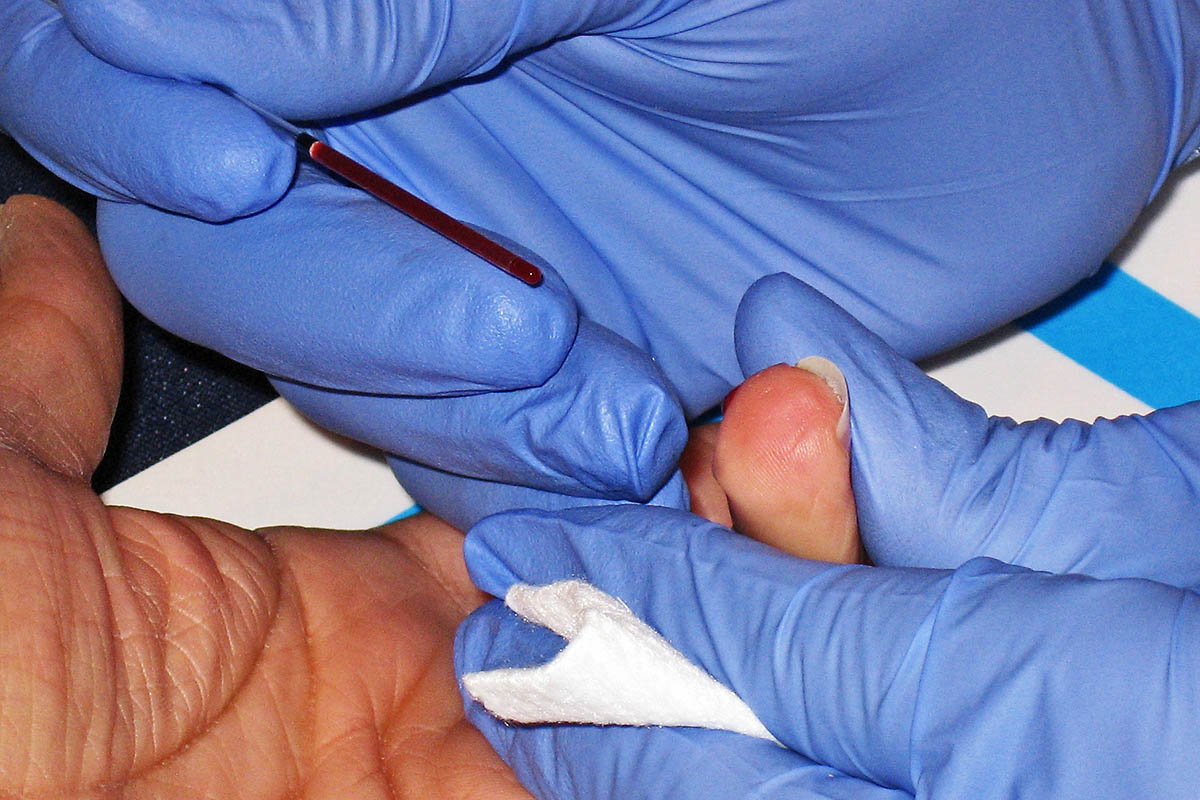
Finger prick for a cholesterol test. (American Heart Association)
American Heart Association says Less than One in 100 Stroke Survivors meet Heart Health Goals
January 30, 2018
Los Angeles, CA – Fewer than one in 100 stroke survivors meet all of Life’s Simple 7 goals for ideal cardiovascular health identified by the American Heart Association.
Moreover, the proportion who fail to meet almost all of the criteria is on the rise, according to preliminary research presented at the American Stroke Association’s International Stroke Conference 2018, a world premier meeting dedicated to the science and treatment of cerebrovascular disease for researchers and clinicians.

Learn to Protect Your Heart and Your Brain with Life’s Simple 7 at www.heart.org/mylifecheck Unhealthy behaviors can lead to narrowing of the blood vessels, reducing blood flow to the brain and potentially leading to hardening of the arteries of the heart and the brain. My Life Check – Life’s Simple 7. (American Heart Association)
American Heart Association says Less than half of Patients prescribed new Cholesterol Drug receive Insurance Approval
November 3, 2017
Circulation Journal Report
Dallas, TX – Less than half of patients received their insurer’s approval for prescriptions of PCSK9 inhibitors, according to new research in the American Heart Association’s journal Circulation.
PCSK9 inhibitors, like Repatha (evolocumab) and Praluent (alirocumab), work by increasing the removal of low-density lipoprotein (LDL) or “bad” cholesterol from the blood. They have been shown to reduce LDL by 60 percent and decrease major cardiac events but cost much more than other cholesterol-lowering drugs with an average cost of $14,300 per year. Prescriptions require prior authorization by health insurance companies.

Prepping the patient to draw blood for a cholesterol test. (American Heart Association)
Men develop Irregular Heartbeat earlier than Women
October 19, 2017
Circulation Journal Report
Dallas, TX – Men develop a type of irregular heartbeat, known as atrial fibrillation, about a decade earlier than women on average, and being overweight is a major risk factor, according to a large new study published in the American Heart Association’s journal Circulation.
In atrial fibrillation, the upper chambers of the heart, or atria, quiver instead of beat to move blood effectively.

The risk of developing the irregular rhythm known as atrial fibrillation rises with increasing age and weight.
Seven steps to keep your brain healthy from childhood to old age
September 21, 2017
American Heart Association/American Stroke Association Presidential Advisory
Dallas, TX – A healthy lifestyle benefits your brain as much as the rest of your body — and may lessen the risk of cognitive decline (a loss of the ability to think well) as you age, according to a new advisory from the American Heart Association/American Stroke Association.
Both the heart and brain need adequate blood flow, but in many people, blood vessels slowly become narrowed or blocked over the course of their life, a disease process known as atherosclerosis, the cause of many heart attacks and strokes.

Improving your health status with Life’s Simple 7 may reduce the risk of dementia caused by strokes, vascular dementia and Alzheimer’s disease. (American Heart Association)
Less than half of stroke patients nationwide are prescribed recommended cholesterol-lowering medication
August 13, 2017
Journal of the American Heart Association Report
Dallas, TX – Nationwide, less than half of stroke patients discharged from the hospital received a prescription for cholesterol-lowering medications called statins, and the likelihood of a prescription varied by patients’ geographic location, sex, age and race, according to new research in Journal of the American Heart Association, the Open Access Journal of the American Heart Association/American Stroke Association.
For patients with ischemic stroke or transient ischemic attacks (“mini-stroke”), the American Heart Association/American Stroke Association recommends statin therapy to reduce the risk of recurrent stroke and other cardiovascular events.
Many people leaving the hospital after a stroke are not getting prescriptions for statins, even though research shows the medication can reduce the recurrence of stroke. (American Heart Association)
Quitting statins after stroke may raise risk of another stroke
August 8, 2017
Dallas, TX – Stroke patients who stopped taking statin drugs three to six months after a first ischemic stroke, the type caused by narrowed arteries, had a higher risk of a having another stroke within a year, according to new research in Journal of the American Heart Association, the Open Access Journal of the American Heart Association/American Stroke Association.
Researchers also found that discontinuing statin drugs, which lower cholesterol, between three and six months after a first ischemic stroke was linked to higher risk of death and hospitalization among the patients in the study.
Stopping statin drug therapy between three and six months after a first ischemic stroke is associated with a higher risk of another stroke within a year. (American Heart Association)
African Americans with Healthier Lifestyles had lower risk of High Blood Pressure
June 27, 2017
Dallas, TX – Among African Americans, small health improvements were associated with lower risk of developing high blood pressure, according to new research in the American Heart Association’s journal Hypertension.
African Americans who had at least two modifiable healthy behaviors at the beginning of the study, compared to those with one or none, researchers found the risk of high blood pressure at follow-up was reduced by 20 percent.

A man checking his blood pressure at an office kiosk. (American Heart Association)
In spite of extraordinary progress, more needs to be done to save Women from Heart Disease, says American Heart Association CEO
June 24, 2017
Washington, D.C. – American Heart Association CEO Nancy Brown and co-author of the study “Knowledge, Attitudes, and Beliefs Regarding Cardiovascular Disease in Women” published today in the Journal of the American College of Cardiology, issued the following comments:
“Cardiovascular diseases cause 1 in 3 deaths among women each year – more than all cancers combined. That’s why the American Heart Association first brought this critical issue to light through the creation of the Go Red For Women™ movement in 2004.”

Nancy Brown; Chief Executive Officer, American Heart Association
Breastfeeding may reduce a Mother’s Heart Attack and Stroke Risk
June 23, 2017
American Heart Association Rapid Access Journal Report
Dallas, TX – Breastfeeding is not only healthy for babies, it may also reduce a mother’s risk of having a heart attack or stroke later in life, according to new research published in of the Journal of the American Heart Association, the Open Access Journal of the American Heart Association/American Stroke Association.
Previous studies have suggested that mothers get short-term health benefits from breastfeeding, such as weight loss and lower cholesterol, blood pressure and glucose levels after pregnancy.

A study of Chinese women found that the longer a mother breastfeeds, the greater the cardiovascular health benefit appears to be. (American Heart Association)


