


Adding High-Quality plant-based Foods to Diet decreases risk of Deaths from Heart Disease and other causes
April 6, 2019
American Heart Association Meeting Report
 Houston, TX – As long as you don’t count French fries and soda as healthy choices, it’s never too late to increase your longevity and cut your risk of heart disease death by adding fruits and vegetables to your diet, according to preliminary research presented at the American Heart Association’s Epidemiology and Prevention | Lifestyle and Cardiometabolic Health Scientific Sessions 2019, a premier global exchange of the latest advances in population based cardiovascular science for researchers and clinicians.

Even in middle age, adding healthy plant foods such as whole grains, fruits and vegetables to your diet may reduce the risk of death from heart disease and other causes. (American Heart Association)
Diverse Diet may not be the healthiest one
September 4, 2018
American Heart Association Scientific Statement
Dallas, TX – Encouraging people to eat a wide variety of foods to ensure they meet all their dietary needs may backfire, according to a new scientific statement from the American Heart Association that provides an overview of recent scientific studies.
“Eating a more diverse diet might be associated with eating a greater variety of both healthy and unhealthy foods” said Marcia C. de Oliveira Otto, Ph.D., lead author of the statement published in the American Heart Association journal Circulation. “Combined, such an eating pattern may lead to increased food consumption and obesity.

Scientific evidence to date does not support the notion that eating a diverse diet is healthy or promotes a healthy weight. (American Heart Association)
High Protein Diet associated with small increased Heart Failure Risk in Middle-Aged Men
June 1, 2018
Circulation: Heart Failure Journal Report
Dallas, TX – For middle-aged men, eating higher amounts of protein was associated with a slightly elevated risk for heart failure than those who ate less protein, according to new research in Circulation: Heart Failure, an American Heart Association journal.
Despite the popularity of high protein diets, there is little research about how diets high in protein might impact men’s heart failure risk.

For middle-aged men, eating higher amounts of protein was associated with a slightly elevated risk for heart failure than those who ate less protein. (American Heart Association)
Drinking coffee may be associated with reduced Risk of Heart Failure and Stroke
November 25, 2017
Anaheim, CA – Drinking coffee may be associated with a decreased risk of developing heart failure or having stroke, according to preliminary research presented at the American Heart Association’s Scientific Sessions 2017, a premier global exchange of the latest advances in cardiovascular science for researchers and clinicians.
Researchers used machine learning to analyze data from the long-running Framingham Heart Study, which includes information about what people eat and their cardiovascular health.

Compared to people who didn’t drink coffee, each cup of coffee a person drank resulted in a 7% lower risk of stroke and a 8% lower risk of heart failure. (American Heart Association)
Meal planning, timing, may impact heart health according to American Heart Association
January 31, 2017
American Heart Association Scientific Statement
Dallas, TX – Planning when to eat meals and snacks and not skipping breakfast, are patterns associated with healthier diets, which could reduce cardiovascular disease risk, according to a new scientific statement published in the American Heart Association journal Circulation.
The statement provides a snapshot of the current scientific evidence suggesting when and how often people eat may impact risk factors for heart attack, stroke, or other cardiac or blood vessel diseases.

Planning and timing meals and snacks, such as not skipping breakfast and allocating more calories earlier in the day, might help reduce cardiovascular disease risk. (American Heart Association)
Sleep disorders may influence heart disease risk factors says American Heart Association
September 26, 2016
American Heart Association Scientific Statement
Dallas, TX – Sleep problems including sleeping too little or too long, may be linked to a variety of factors that may raise the risk for cardiovascular diseases, according to a new American Heart Association scientific statement published in the American Heart Association journal Circulation.
The first statement by the American Heart Association on sleep and heart health outlines what we currently know about sleep irregularities and cardiovascular-related risk factors, including obesity, Type 2 diabetes, heart disease and atherosclerosis, arrhythmias, high blood pressure, stroke, unhealthy levels of triglycerides and cholesterol.

Research linking sleep problems to obesity and diabetes is robust, but longer studies measuring impact on actual weight are needed. (American Heart Association)
Children should eat less than 25 grams of added sugars daily according to American Heart Association
August 27, 2016
American Heart Association Scientific Statement
 Dallas, TX – Children ages 2 to 18 should eat or drink less than six teaspoons of added sugars daily, according to the scientific statement recommending a specific limit on added sugars for children, published in the American Heart Association journal Circulation.
Six teaspoons of added sugars is equivalent to about 100 calories or 25 grams.
“Our target recommendation is the same for all children between the ages of 2 and 18 to keep it simple for parents and public health advocates,” said Miriam Vos, M.D., Ms.P.H, lead author, nutrition scientist and associate professor of pediatrics at Emory University School of Medicine in Atlanta, Georgia.
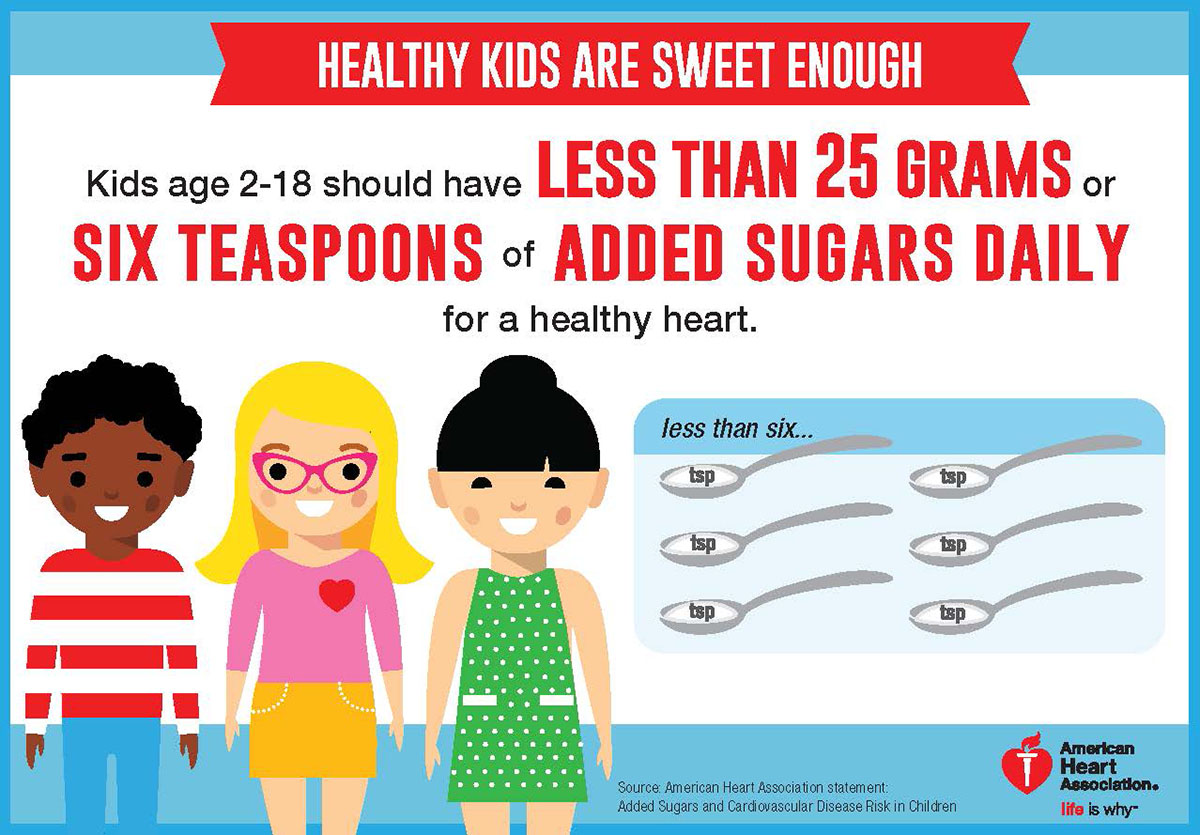
Healthy kids are sweet enough. Kids age 2-18 should have less than 25 grams or six teaspoons of added sugar daily for a healthy heart. (American Heart Association)
Eating more Whole Grains linked with Lower Risk of Death
June 14, 2016
American Heart Association Journal Report
Dallas, TX – Eating at least three servings of whole grains every day could lower your risk of death, according to new research in the American Heart Association’s journal Circulation.
Although dietary guidelines around the world have included whole grains as an essential component of healthy eating patterns, people aren’t eating enough, according to the analysis. In the United States average consumption remains below one serving a day, despite the long-time recommendation of three servings a day.

Eating at least three servings of whole grains a day was associated with lower risk of death from cardiovascular disease, cancer and all causes in an analysis of nutrition studies. (American Heart Association)
Healthy diet may reduce high blood pressure risk in pregnancy-related diabetes
May 2, 2016
Dallas, TX – Women with pregnancy-related diabetes (gestational diabetes) are at greater risk of developing high blood pressure later in life; however, a healthy diet may significantly reduce that risk, according to new research in the American Heart Association’s journal Hypertension.
Researchers studied 3,818 women with a history of pregnancy-related diabetes enrolled in the Nurses’ Health Study II as a part of the ongoing Diabetes & Women’s Health Study. Over 22 years of follow-up, 1,069 women developed high blood pressure, which in turn increased their risk of having a heart attack or stroke.

A healthy diet may reduce the risk that women with pregnancy-related diabetes will develop high blood pressure later in life. (American Heart Association)
American Heart Association reports Factors associated with good Heart Health may also protect Kidneys
April 10, 2016
American Heart Association Rapid Access Journal Report
Dallas, TX – Achieving the American Heart Association’s definition of ideal cardiovascular health may also help prevent chronic kidney disease, according to new research in the Journal of the American Heart Association.
Life’s Simple 7 are the ideal cardiovascular health factors/goals that include healthy blood pressure, cholesterol, blood sugar, diet, body weight, enough physical activity and not smoking.

Casey M. Rebholz, PhD, MS, MPH; Assistant Professor, Department of Epidemiology, Johns Hopkins Bloomberg School of Public Health. (Fred Dubs/American Heart Association)


