


American Heart Association reports “Off-the-shelf” artificial blood vessels may reduce dialysis complications
April 30, 2013
Artificial blood vessels remained durable in an animal trial and show promise for patients with end-stage kidney disease.
 Dallas, TX – “Off-the-shelf” blood vessels could one day reduce some complications of dialysis treatment, according to preliminary research presented at the American Heart Association’s Emerging Science Series Webinar.
Scientists bioengineered an artificial blood vessel by seeding human aorta cells onto a biodegradable mesh tube. In the process, a tubular vein develops in two months as the growing cells secrete proteins and the mesh support structure dissolves. The new vessel is then prepped in a way that minimizes chances of an immune reaction in the recipient. [Read more]
American Heart Association says drinking cup of beetroot juice daily may help lower blood pressure
April 18, 2013
Increasing intake of foods rich in dietary nitrate may be an affordable and attainable way to manage blood pressure, researchers said.
Dallas, TX – A cup of beetroot juice a day may help reduce your blood pressure, according to a small study in the American Heart Association journal Hypertension.
People with high blood pressure who drank about 8 ounces of beetroot juice experienced a decrease in blood pressure of about 10 mm Hg. But the preliminary findings don’t yet suggest that supplementing your diet with beetroot juice benefits your health, researchers said.

Beetroot juice contains dietary nitrate, which may help relax blood vessel walls and improve blood flow. (Copyright American Heart Association)
American Heart Association says eating more fiber may lower risk of first-time stroke
April 11, 2013
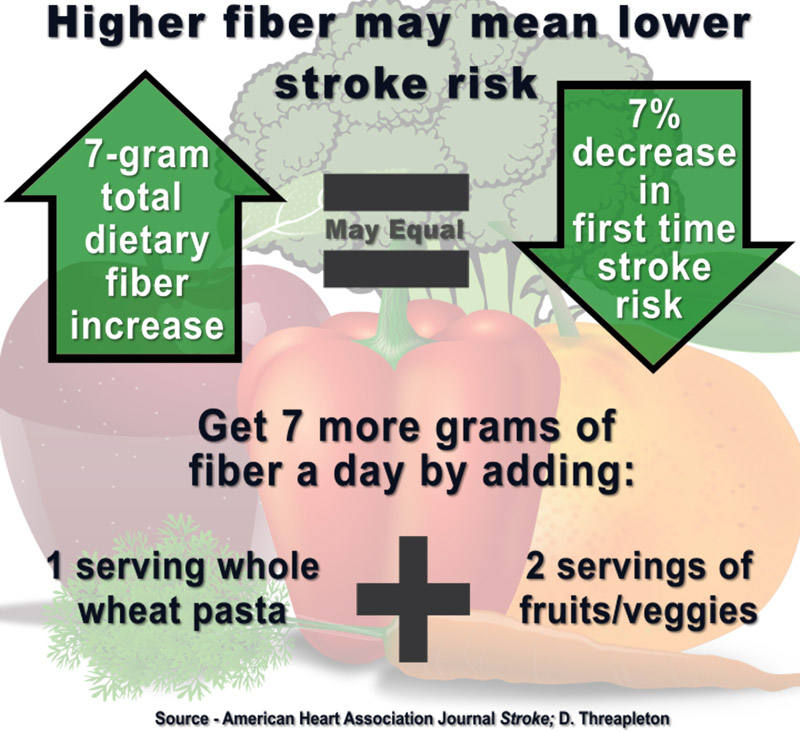
The results reinforce the importance of a diet that includes at least 25 grams of fiber daily.
Dallas, TX – Eating more fiber may decrease your risk of first-time stroke, according to new research in the American Heart Association journal Stroke.
Dietary fiber is the part of the plant that the body doesn’t absorb during digestion. Fiber can be soluble, which means it dissolves in water, or insoluble.
American Heart Association reports Too much Salt may damage Blood Vessels and lead to High Blood Pressure
June 24, 2012
Eating a high-salt diet for several years is associated with markers of blood vessel damage
Dallas, TX – Eating a high-salt diet for several years may damage blood vessels — increasing your risk of developing high blood pressure, according to research reported in the American Heart Association journal Circulation.
People with this type of blood vessel damage who eat a high-salt diet are more likely to develop hypertension, or high blood pressure . This research hints at the presence of a “sodium amplification loop” in which eating too much salt for a long time damages blood vessels, leading to a greater chance of developing high blood pressure if the high-salt diet is continued. [Read more]
American Heart Association states No proof that Gum Disease causes Heart Disease or Stroke
April 21, 2012
Dallas, TX – Despite popular belief, gum disease hasn’t been proven to cause atherosclerotic heart disease or stroke, and treating gum disease hasn’t been proven to prevent heart disease or stroke, according to a new scientific statement published in Circulation, an American Heart Association journal. Keeping teeth and gums healthy is important for your overall health. However, an American Heart Association expert committee — made up of cardiologists, dentists and infectious diseases specialists — found no conclusive scientific evidence that gum disease, also known as periodontal disease, causes or increases the rates of cardiovascular diseases. [Read more]
American Heart Association reports Long-time diabetics have increased Risk of Stroke
March 1, 2012
Dallas, TX – The longer you have diabetes, the higher your risk for stroke, according to a study in Stroke, an American Heart Association journal.
In the study, diabetes increased stroke risk 3 percent each year and tripled the risk for people who had diabetes for 10 years or more, compared to people without diabetes.
“The findings emphasize the chronic nature of diabetes and the fact that it damages the blood vessels over time,” said Mitchell S. V. Elkind, M.D., M.S., the study’s senior author and associate chairman of neurology for clinical research and training at Columbia University Medical Center in New York City. [Read more]
Obstructive Sleep Apnea linked to Blood Vessel Abnormalities
July 12, 2011
Dallas, TX – Obstructive sleep apnea may cause changes in blood vessel function that reduces blood supply to the heart in people who are otherwise healthy, according to new research reported in Hypertension: Journal of the American Heart Association.
However, treatment with 26 weeks of continuous positive airway pressure (CPAP) improved study participants’ blood supply and function. [Read more]
First Patients receive lab-grown Blood Vessels from Donor Cells
June 28, 2011
 Dallas, TX – For the first time, human blood vessels grown in a laboratory from donor skin cells have been successfully implanted into patients, according to new research presented in the American Heart Association’s Emerging Science Series webinar.
While more testing is needed, such “off-the-shelf” blood vessels could soon be used to improve the process and affordability of kidney dialysis.
“Our approach could allow hundreds of thousands of patients to be treated from one master cell line,” said study lead author Todd N. McAllister, Ph.D., co-founder and chief executive officer of Cytograft Tissue Engineering Inc., of Novato, CA. [Read more]


