


Cigarette smoking associated with increased risk of peripheral artery disease in African Americans
January 24, 2019
Journal of the American Heart Association Report
 Dallas, TX – African Americans who smoke cigarettes are more likely than those who don’t smoke to develop peripheral artery disease, according to new research in Journal of the American Heart Association, the Open Access Journal of the American Heart Association/American Stroke Association.
Peripheral artery disease (PAD) is a narrowing of arteries other then those directly serving the heart.
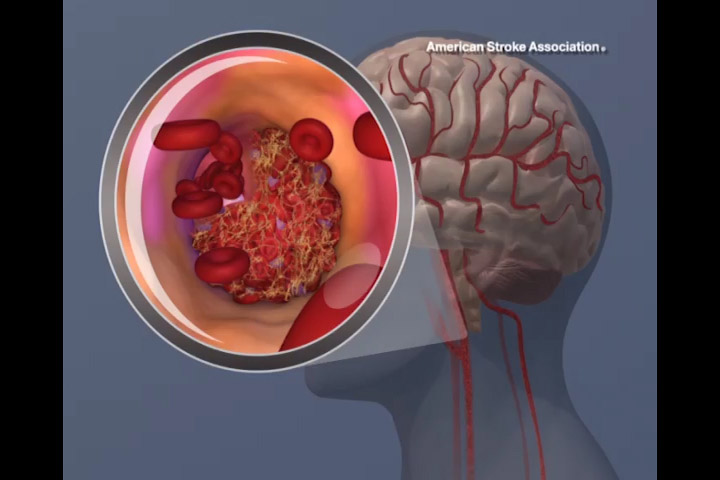
A blood clot forming in the carotid artery. (American Heart Association)
American Stroke Association says a usually-ignored finding in the Kidneys may signal Stroke Risk
February 22, 2018
 Los Angeles, CA – Sacs of fluid in the kidneys may indicate there is also blood vessel damage in the brain and a heightened risk of stroke, according to preliminary research presented at the American Stroke Association’s International Stroke Conference 2018, a world premier meeting dedicated to the science and treatment of cerebrovascular disease for researchers and clinicians.
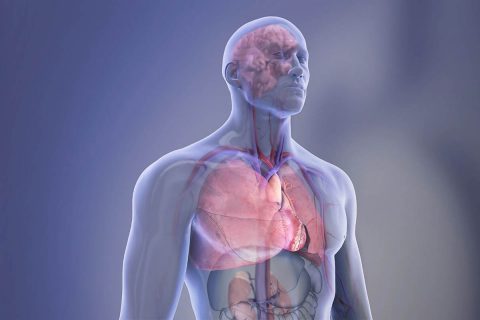
Heart disease is the Number 1 killer in the United States. (American Heart Association)
Heat-not-Burn Tobacco Products may be ‘not so hot’ at protecting Blood Vessel Function
December 2, 2017
Anaheim, CA – Heat-not-burn devices may eliminate users’ exposure to tobacco smoke, but the vapor they produce has the same negative impact on blood vessel function as smoking, according to a preliminary animal study presented at the American Heart Association’s Scientific Sessions 2017, a premier global exchange of the latest advances in cardiovascular science for researchers and clinicians.
Heat-not-burn products are not new, but have been recently updated and test marketed in several countries outside the United States with greater success.
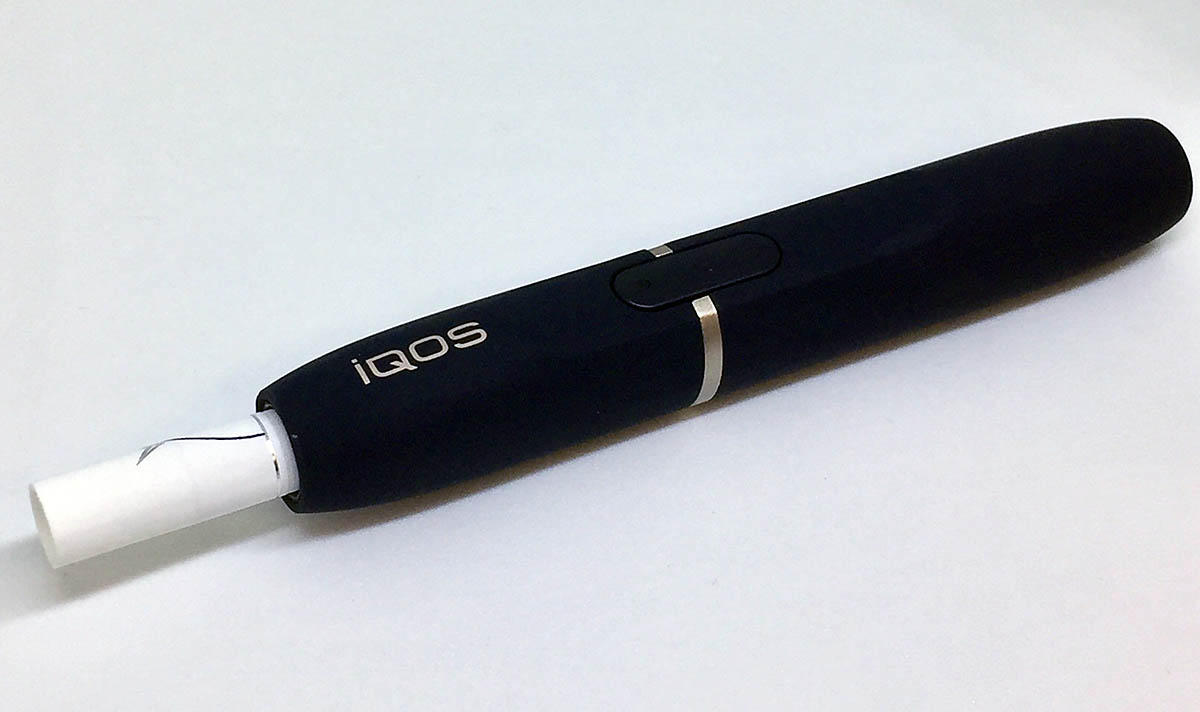
iQOS device used in “Impairment of Endothelial Function by Inhalation of Heat-Not-Burn Tobacco Aerosol” study. (Jesse Elias)
American Heart Association says Quality of Stent Procedures consistently good across U.S. regardless of popular Hospital Ranking
November 18, 2017
American Heart Association Meeting Report Poster Presentation S2003
Anaheim, CA – Hospitals ranked among the best in cardiology and heart surgery by U.S. News and World Report appear no better at performing percutaneous coronary intervention (PCI), a potentially life-saving heart procedure, than unranked hospitals, according to preliminary research presented at the American Heart Association’s Scientific Sessions 2017, a premier global exchange of the latest advances in cardiovascular science for researchers and clinicians.

Patients undergoing percutaneous coronary intervention (PCI), or angioplasty, for blocked or narrowed arteries appear to fare equally well at hospitals ranked among the best in heart care by U.S. News and World Report and at unranked hospitals. (American Heart Association)
American Heart Association says Extreme Heat Exposure linked to Firefighter Heart Attacks
April 11, 2017
American Heart Association Rapid Access Journal Report
Dallas, TX – Exposure to extreme heat and physical exertion during firefighting may trigger the formation of blood clots and impair blood vessel function, changes associated with increased risk of heart attack, according to new research in the American Heart Association’s journal Circulation.
Cardiovascular events are the leading cause of death among firefighters and are responsible for roughly 45 percent of on-duty firefighter fatalities annually in the United States.
Exposure to extreme heat and physical exertion during firefighting may trigger the formation of blood clots and impair blood vessel function, changes associated with increased risk of heart attack. (American Heart Association)
Air Pollution linked to Blood Vessel damage in Healthy Young Adults
October 28, 2016
American Heart Association Rapid Access Journal Report
Dallas, TX – Fine particulate matter air pollution may be associated with blood vessel damage and inflammation among young, healthy adults, according to new research in Circulation Research, an American Heart Association journal.
“These results substantially expand our understanding about how air pollution contributes to cardiovascular disease by showing that exposure is associated with a cascade of adverse effects,” said C. Arden Pope, Ph.D., study lead author and Mary Lou Fulton Professor of Economics at Brigham Young University in Provo, Utah.
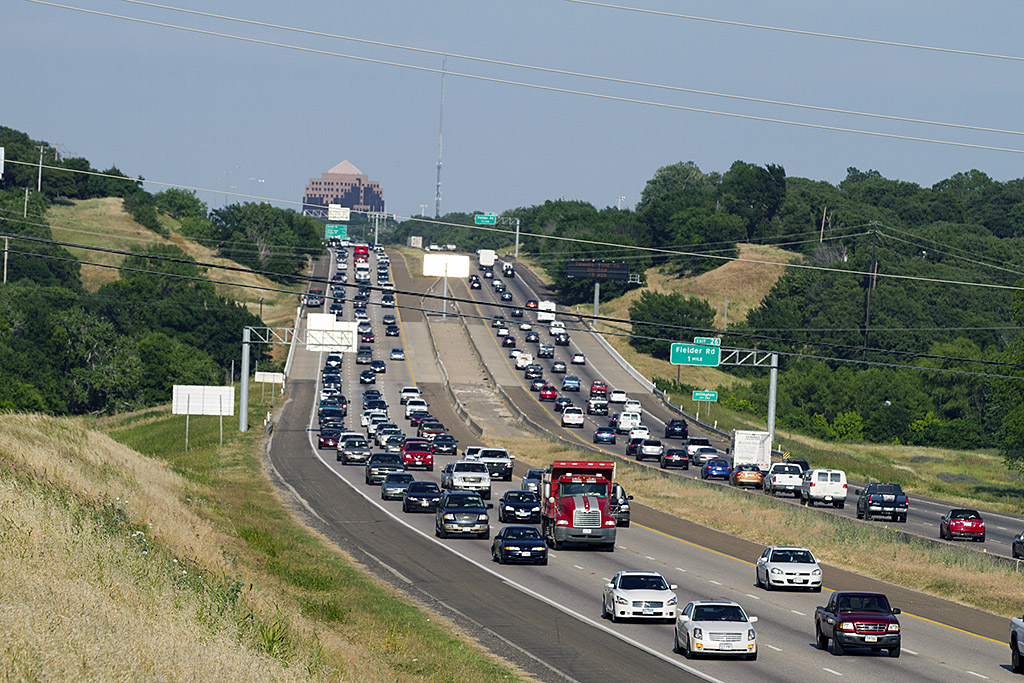
Traffic on the highway. (American Heart Association)
A minute of Secondhand Marijuana Smoke may Damage Blood Vessels
July 28, 2016
American Heart Association Rapid Access Journal Report
Dallas, TX – Rats’ blood vessels took at least three times longer to recover function after only a minute of breathing secondhand marijuana smoke, compared to recovery after a minute of breathing secondhand tobacco smoke, according to new research in Journal of the American Heart Association, the Open Access Journal of the American Heart Association/American Stroke Association.
When rats inhaled secondhand marijuana smoke for one minute, their arteries carried blood less efficiently for at least 90 minutes, whereas similar exposure to secondhand tobacco smoke caused blood vessel impairment that recovered within 30 minutes.

With many states legalizing medical and recreational marijuana, and possible corporate expansion within the cannabis industry, this type of research is important to help understand the health consequences of exposure to secondhand marijuana smoke, researchers said. (American Heart Association)
American Heart Association reports Excessive daily TV watching may increase risk of Death
July 26, 2016
American Heart Association Rapid Access Journal Report
Dallas, TX – Watching a lot of television every day may increase your risk of dying from a blood clot in the lung, according to new research in the American Heart Association’s journal Circulation.
A lung blood clot, known medically as a pulmonary embolism, usually begins as a clot in the leg or pelvis as a result of inactivity and slowed blood flow.
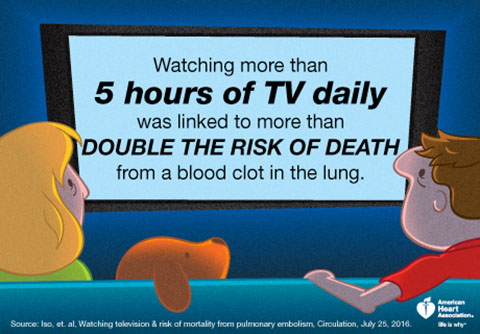
Watching more than 5 hours of TV daily was linked to more than double the risk of death from a blood clot in the lung. (American Heart Association)
Hard to treat Chest Pain may be improved with a Patient’s own Stem Cells according to American Heart Association
July 20, 2016
Phoenix, AZ – A non-surgical treatment that uses a patient’s own bone marrow stem cells to treat chest pain or angina improved both symptoms and the length of time treated patients could be physically active, according to preliminary research presented at the American Heart Association’s Basic Cardiovascular Sciences 2016 Scientific Sessions.
Angina is chest pain or discomfort caused when the heart does not get enough oxygen-rich blood due to narrowing or blockages in the arteries leading to the heart.
A patient’s own stem cells may treat chest pain that cannot be treated with current therapies. (American Heart Association)
Post-Traumatic Stress Disorder may affect Blood Vessel Health in Veterans
March 24, 2016
Dallas, TX – Post-traumatic stress disorder (PTSD) may decrease the ability of blood vessels to dilate, raising the risk of heart attack and stroke in veterans, according to new research in the Journal of the American Heart Association.
In the largest study to date on the impact of post-traumatic stress disorder (PTSD) on blood vessel health, researchers found that blood vessels of veterans with PTSD were unable to expand normally in response to stimulus – they were less reactive — compared to veterans without PTSD. Less reactive blood vessels are linked to heart disease and other serious conditions.
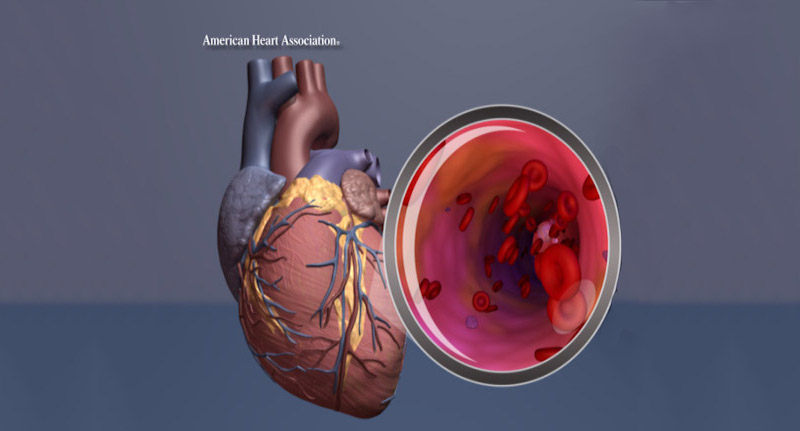
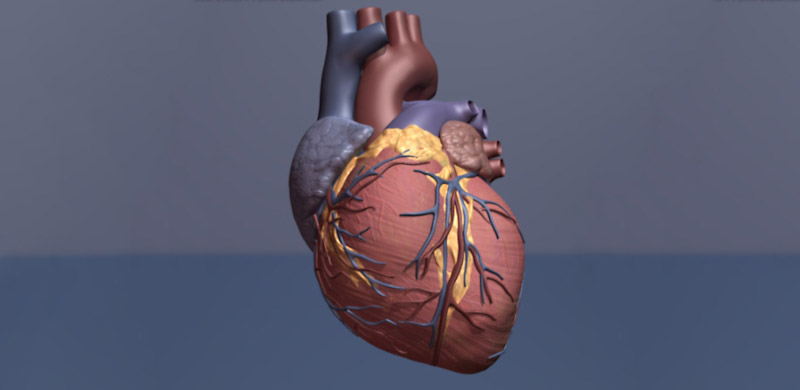
Heart illustration with artery close up. (American Heart Association)


