


American Heart Association, American College of Cardiology to Offer Hospital Cardiovascular Accreditation Services
October 31, 2016
Collaboration will support improvements in cardiovascular care and patient outcomes
 Dallas, TX – U.S. hospitals and other institutions will have access to a single, comprehensive set of cardiovascular accreditation services through a new collaboration between the American College of Cardiology (ACC) and the American Heart Association (AHA).
Starting in 2017, hospitals will be able to take advantage of a suite of co-branded accreditation services focused on all aspects of cardiac care, including chest pain, cardiac catheterization, atrial fibrillation, heart failure and other cardiovascular conditions.
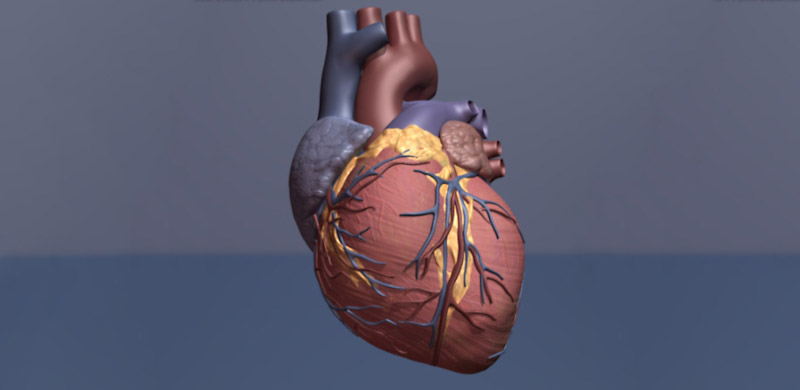
Heart Illustration. (American Heart Association)
Short episodes of Abnormal Heart Rhythm may not increase Risk of Stroke
October 18, 2016
American Heart Association Rapid Access Journal Report
Dallas, TX – People with pacemakers or defibrillators who experience only short episodes of an abnormal heart rhythm known as atrial fibrillation have a very low risk of stroke, suggesting that anticoagulants in this group of patients were not likely to reduce the risk for stroke, according to new research in the American Heart Association’s journal Circulation.
Atrial fibrillation is the most common abnormal heart rhythm, affecting approximately 2.7 million Americans.
People with pacemakers or defibrillators who experience short episodes an abnormal heart rhythm called atrial fibrillation have no higher risk for stroke or other medical complications than people without documented atrial fibrillation. (American Heart Association)
Drinking alcohol daily may enlarge heart chamber; lead to atrial fibrillation
September 18, 2016
American Heart Association Rapid Access Journal Report
Dallas, TX – Despite the common perception that moderate alcohol intake is good for the heart, new research suggests long-term alcohol consumption, even as little as one drink a day may enlarge the heart’s left upper chamber (atrium) and increase the risk of developing atrial fibrillation, according to new research in Journal of the American Heart Association, the Open Access Journal of the American Heart Association/American Stroke Association.

Daily, long-term alcohol consumption was associated with a five percent higher risk of developing atrial fibrillation. (American Heart Association)
American Heart Association reports Performance, Quality Measures Updated for Patients with Atrial Fibrillation
June 29, 2016
Washington, D.C. – The American College of Cardiology and the American Heart Association today released updated clinical performance and quality measures for treating adult patients with atrial fibrillation or atrial flutter. This document updates the previous measure set that was released in 2008 and for which implementation notes were issued in 2011.
“Atrial fibrillation is the most common cardiac arrhythmia in the United States,” said Paul A. Heidenreich, M.D., M.S., FACC, professor and vice-chair for clinical, quality and analytics in the department of medicine at the Stanford University School of Medicine and the chair of the writing committee. “This condition impacts between 2.7 million and 6.1 million American adults, and this number is expected to double by 2050. Updating the measure set was a priority for the ACC and AHA.”
Heart Illustration. (American Heart Association)
American Heart Association says Irregular Heart Rhythm may affect Walking and Strength in older Adults
April 8, 2016
Circulation: Arrhythmia and Electrophysiology Rapid Access Journal Report
Dallas, TX – When older people develop atrial fibrillation — the most common type of irregular heartbeat — it accelerates age-related declines in walking speed, strength, balance and other aspects of physical performance, according to new research in Circulation: Arrhythmia and Electrophysiology, an American Heart Association journal.
“Particularly in older adults, we need to be mindful that the effects of atrial fibrillation (AFib or AF) go beyond increasing the risk of heart failure and stroke. We learned from this study that older adults with AFib are especially vulnerable to losing strength, balance, gait speed and coordination,” said Jared W. Magnani, M.D., Ms.C., lead author of the study and assistant professor of medicine at Boston University.

When people over age 70 develop atrial fibrillation, the most common type of irregular heartbeat, it accelerates age-related declines in walking speed, strength, balance and other aspects of physical performance. (American Heart Association)
American Heart Association says Women’s Heart Disease should be a Research Priority
March 11, 2015
Dallax, TX – The latest gender-specific research on heart disease continues to show differences between women and men, yet gaps remain in how to best diagnose, treat and prevent this number one killer of women, according to studies published in Circulation: Cardiovascular Quality and Outcomes, an American Heart Association journal.
A portion of the March 2015 issue, published online ahead of print, is dedicated to research in women.

Nancy Brown; Chief Executive Officer, American Heart Association
American Stroke Association says Implanted Cardiac Monitor identifies Stroke risk better than traditional methods
March 7, 2014
 San Diego, CA – A cardiac monitor about the size of a USB flash drive that’s implanted under the skin was six to seven times more likely to detect atrial fibrillation, an abnormal heart rhythm that’s a risk factor for stroke, according to a science report presented at the American Stroke Association’s International Stroke Conference 2014.
The monitor could help identify the 30 percent of ischemic strokes with no apparent cause. Ischemic strokes are caused by a clot in a blood vessel in or near the brain. [Read more]
American Heart Association sets first guidelines for reducing stroke risks unique to women
February 10, 2014
Dallas, TX – For the first time, guidelines have been developed for preventing stroke in women.
“If you are a woman, you share many of the same risk factors for stroke with men, but your risk is also influenced by hormones, reproductive health, pregnancy, childbirth and other sex-related factors,” said Cheryl Bushnell, M.D., M.H.S., author of the new scientific statement published in the American Heart Association journal Stroke.
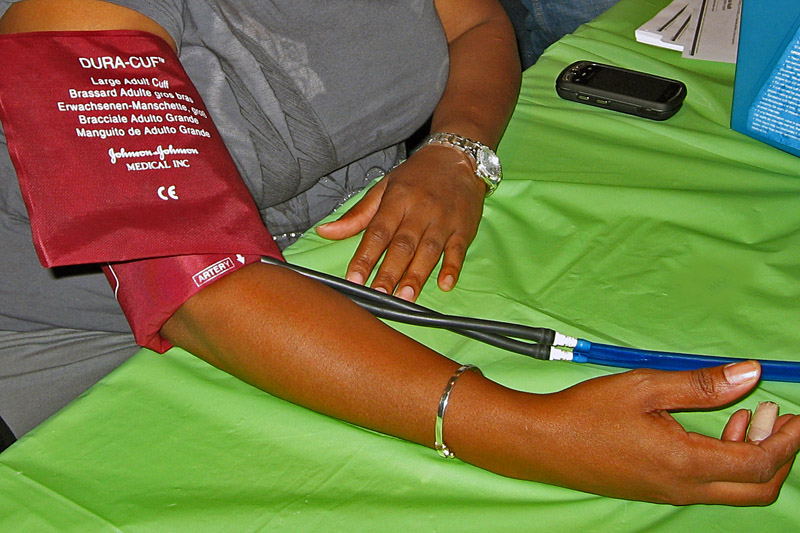
Blood Pressure Check. (American Heart Association)
One in six people worldwide will have a stroke in their lifetime; World Stroke Day is October 29th
October 24, 2013
According to a new survey, people more likely to witness a stroke might not know how to identify one; free app helps people Spot a Stroke F.A.S.T.
Nashville, TN – Crystal Wall was having a typical chat on the phone with her sister Chassity Anderson — until her sister’s phone abruptly crashed to the floor and her words suddenly became slurred.
Anderson, 37, was having another stroke.
“Because my sister had suffered from stroke before, I recognized the warning signs and knew to call 9-1-1,” Wall said. “I know stroke is something that can happen to anyone at any time and if it does, you have to act quickly. The longer you wait, the worse it can be.” [Read more]


