


American Heart Association reports Gene Editing Technology may improve accuracy of predicting individuals’ Heart Disease Risk
July 12, 2018
American Heart Association Circulation Journal Report
 Dallas, TX – Scientists may now be able to predict whether carrying a specific genetic variant increases a person’s risk for disease using gene editing and stem cell technologies, according to new research in the American Heart Association’s journal Circulation.
For the first time, the study demonstrates the unique potential of combining stem cell-based disease modeling (Induced pluripotent stem cells) and CRISPR/Cas9-mediated genome editing technology as a personalized risk-assessment platform for determining the disease-causing ability of a yet undescribed genetic variant, known as a “variant of uncertain significance” or VUS.

Gene-editing technology may help scientists discern whether genetic variations with undetermined effects are harmless or dangerous. (American Heart Association)
Genomic Medicine may one day revolutionize Cardiovascular Care
June 20, 2018
American Heart Association
Dallas, TX – A new scientific statement from the American Heart Association summarizes the state-of-the-science of genomic medicine — the study of the health effects of the molecular interactions of a person’s unique genes — for studying cardiovascular traits and disorders and for therapeutic screening.

Genomic medicine could enable doctors to make predictions about people’s health, from the likelihood of developing heart disease or stroke to the severity of disease, as well as medications for treatment. (American Heart Association)
American Heart Association reports Umbilical Cord Stem Cells show promise as Heart Failure Treatment
October 6, 2017
Circulation Research Journal Report
Dallas, TX – A heart failure treatment using umbilical cord-derived stem cells may lead to notable improvements in heart muscle function and quality of life, according to a new study published in Circulation Research, an American Heart Association journal.
“We are encouraged by our findings because they could pave the way to a non-invasive, promising new therapy for a group of patients who face grim odds,” said study corresponding author Fernando Figueroa, M.D., professor of medicine at the Universidad de los Andes in Chile.
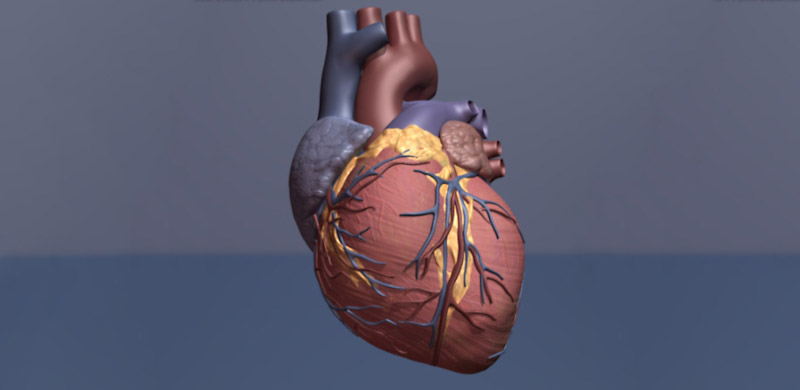
Intravenous stem cell infusion derived from umbilical cords appears to boost heart muscle function in patients with heart failure, according to a small study. (American Heart Association)
American Heart Association says Stem Cell Patch shows early promise in treating Heart Failure
April 13, 2017
American Heart Association Rapid Access Journal Report
Dallas, TX – Patching a damaged heart with a patient’s own muscle stem cells improves symptoms of heart failure, according to a Phase I clinical trial reported in Journal of the American Heart Association, the Open Access Journal of the American Heart Association/American Stroke Association.
In this new study, Japanese researchers made patches out of cells taken from the thigh muscles of patients with heart failure and surgically glued the patch onto the surface of the patients’ hearts.
In a Phase I clinical trial, heart failure patients treated with patches made from their muscle cells showed improved exercise capacity and heart function after one year. (American Heart Association)
Hard to treat Chest Pain may be improved with a Patient’s own Stem Cells according to American Heart Association
July 20, 2016
Phoenix, AZ – A non-surgical treatment that uses a patient’s own bone marrow stem cells to treat chest pain or angina improved both symptoms and the length of time treated patients could be physically active, according to preliminary research presented at the American Heart Association’s Basic Cardiovascular Sciences 2016 Scientific Sessions.
Angina is chest pain or discomfort caused when the heart does not get enough oxygen-rich blood due to narrowing or blockages in the arteries leading to the heart.
A patient’s own stem cells may treat chest pain that cannot be treated with current therapies. (American Heart Association)
Heart damage improves, reverses after stem cell injections in a preliminary human trial
March 20, 2011
 Dallas, TX – Researchers have shown for the first time that stem cells injected into enlarged hearts reduced heart size, reduced scar tissue and improved function to injured heart areas, according to a small trial published in Circulation Research: Journal of the American Heart Association.
Researchers said that while this research is in the early stages, the findings are promising for the more than five million Americans who have enlarged hearts due to damage sustained from heart attacks. These patients can suffer premature death, have major disability and experience frequent hospitalizations. [Read more]


