


FDA Coronavirus (COVID-19) Update: June 3rd, 2020
June 3, 2020
 Silver Spring, MD – The U.S. Food and Drug Administration (FDA) continues to take action in the ongoing response to the COVID-19 Coronavirus pandemic:
The agency issued a new FDA Voices, titled Pandemic Challenges Highlight the Importance of the New Era of Smarter Food Safety, and bylined by Stephen M. Hahn, M.D., Commissioner of Food and Drugs, and Frank Yiannas, Deputy Commissioner for Food Policy and Response.

Coronavirus
NASA offers Coloring Activities for Young Students
May 23, 2020
 Hampton, VA – NASA’s Langley Research Center in Hampton, Virginia has been at the forefront of humankind’s journey into space. From the Apollo missions to the Artemis program, Langley has helped bring color to space.
Now, it’s your turn to color the galaxy with our NASA Space Crafts activity and coloring pages.
As part of the agency’s NASA@Home initiative, students from elementary school age and above can add their creativity to the people and technologies that have propelled humans to the Moon and beyond.
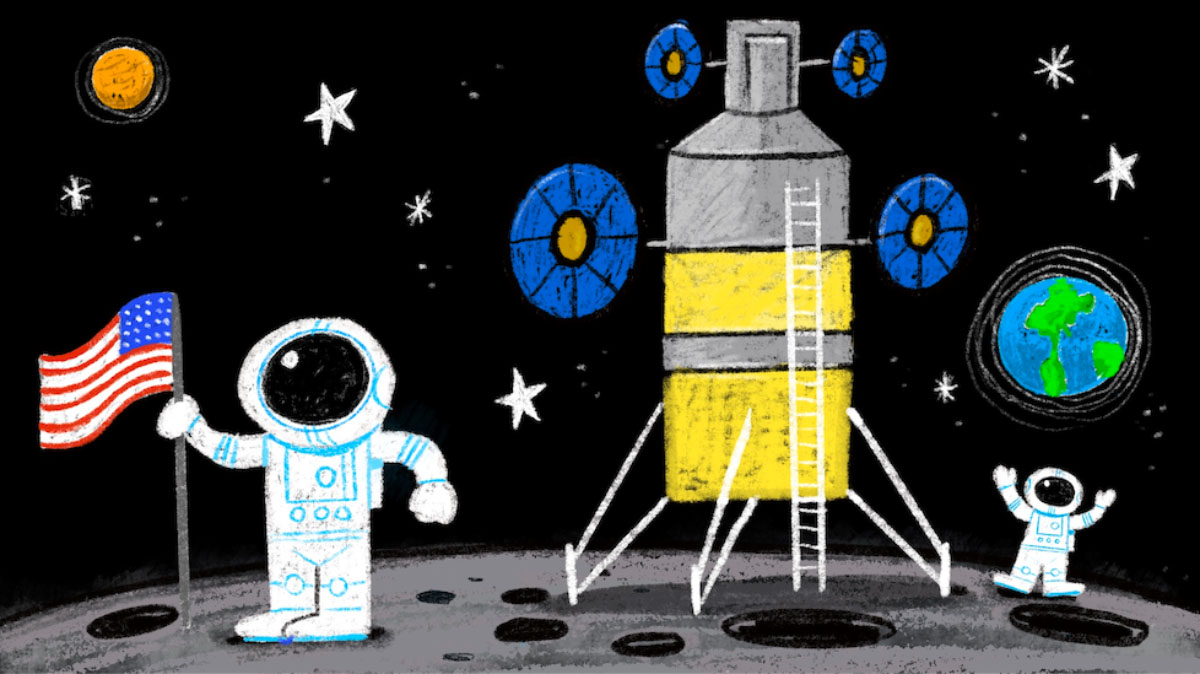
As part of the agency’s NASA@Home initiative, students from elementary school age and above can add their creativity to the people and technologies that have propelled humans to the Moon and beyond. (NASA’s Langley Research Center)
New Personal Active UVC Air Sterilizer Will Combat COVID-19
May 1, 2020
 Algonquin, IL – With the COVID-19 Coronavirus pandemic plaguing the U.S. and people around the world, Cair Products (www.cairproducts.com) announces the development of its new Personal Active UVC Air Sterilizer is in its final stages of testing and certification. The product will be available within 45 days of the release with a “patent pending” status.
With this unit, a patent-pending active sterilization system focuses on the individual user and sterilizing the air the user breathes and exhales.

Coronavirus.
FDA Coronavirus (COVID-19) Update: May 1st, 2020
May 1, 2020
Silver Spring, MD – The U.S. Food and Drug Administration (FDA) has continued to take action in the ongoing response effort to the COVID-19 Coronavirus pandemic:
Thursday, the FDA included, under the ventilator emergency use authorization (EUA), a ventilator developed by the National Aeronautics and Space Administration (NASA), which is tailored to treat patients with COVID-19 Coronavirus.
Coronavirus
White House Announces New Partnership to Unleash U.S. Supercomputing Resources to Fight Coronavirus
March 23, 2020
 Washington, D.C. – The White House announced the launch of the COVID-19 High Performance Computing Consortium to provide coronavirus (COVID-19) researchers worldwide with access to the world’s most powerful high performance computing resources that can significantly advance the pace of scientific discovery in the fight to stop the virus.

American Heart Association says NASA Astronauts less likely to faint on Earth if they Exercise in Space
September 4, 2019
Findings May Help Others with Fainting Issues
 Dallas, TX – Nearly 50 years after man’s first steps on the moon, researchers have discovered a way that may help astronauts spending prolonged time in space come back to Earth on more stable footing, according to new research in the American Heart Association’s journal Circulation.
“One of the biggest problems since the inception of the manned space program has been that astronauts have fainted when they came down to Earth ,” said Benjamin Levine, M.D., the study’s senior author who is professor of Exercise Sciences at UT Southwestern Medical Center and director of the Institute for Exercise and Environmental Medicine at Texas Health Presbyterian Hospital in Dallas.
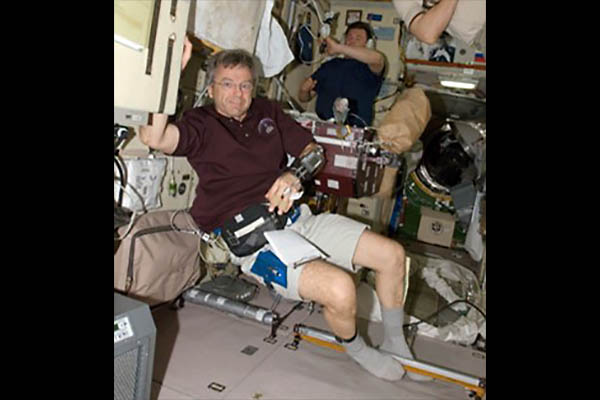
Former Canadian Astronaut Robert “Bob” Thirsk wearing device which continuously measures blood pressure. (NASA)
Climate Change may increase Congenital Heart Defects
January 31, 2019
Journal of the American Heart Association Report
 Dallas, TX – Rising temperatures stemming from global climate change may increase the number of infants born with congenital heart defects (CHD) in the United States over the next two decades and may result in as many as 7,000 additional cases over an 11 year-period in eight representative states (Arkansas, Texas, California, Iowa, North Caroline, Georgia, New York and Utah), according to new research in the Journal of the American Heart Association, the Open Access Journal of the American Heart Association/American Stroke Association.

The greatest percentage increases in the number of congenital heart defects are predicted in the Midwest, followed by the Northeast and the South. (American Heart Association)
NASA Launches JPL-Built Earth Science Experiment
October 31, 2011
Written by Alan Buis
Jet Propulsion Laboratory
 Pasadena, CA – An experiment developed by NASA’s Jet Propulsion Laboratory, Pasadena, CA, to test technology for future NASA Earth science missions was aboard one of five small “CubeSat” research satellites that hitched a ride to orbit October 28th with NASA’s newest Earth-observing satellite, the National Polar-orbiting Operational Environmental Satellite System Preparatory Project, or NPP.
NPP, which successfully launched aboard a Delta II rocket from California’s Vandenberg Air Force Base, will provide critical data to help scientists understand the dynamics of long-term climate patterns and help meteorologists improve short-term weather forecasts. A little more than an hour and a half after launch, the Delta II deployed the five auxiliary CubeSat payloads, which are the third installment of a series of NASA Educational Launch of Nanosatellite missions, also known as ELaNa III.

Delta II Lifts Off Carrying NPP, JPL CubeSat Experiment At Vandenberg Air Force Base's Space Launch Complex-2 in California, a United Launch Alliance Delta II lifts off carrying NASA's National Polar-orbiting Operational Environmental Satellite System Preparatory Project (NPP) spacecraft and five small CubeSat research satellites, including M-Cubed, with features JPL's COVE Earth science technology experiment. (Image credit: NASA/ULA)
GRAIL and the Mystery of the Missing Moon
September 8, 2011
Written by Dauna Coulter
Science@NASA
Pasadena, CA – As early as September 8th, NASA’s GRAIL mission will blast off to uncover some of the mysteries beneath the surface of the Moon. That cratered gray exterior hides some tantalizing things – even, perhaps, a long-lost companion.
The “Big Splat.” Four snapshots from a computer simulation of a collision between the Moon and a smaller companion show how the splattered companion moon forms a mountainous region on one side of the Moon. Credit: M. Jutzi and E. Asphaug, Nature. [more] If a paper published recently in the journal Nature* is right, two moons once graced our night skies. The proposition has not been proven, but has drawn widespread attention.

Flying in formation around the Moon, NASA's twin GRAIL spacecraft will make precise measurements of the lunar gravitational field.


