


American Heart Association reports Sound Therapy may balance brain signals to reduce Blood Pressure, Migraines
September 22, 2016
American Heart Association Meeting Report Abstracts P310, P602
 Orlando, FL – A noninvasive neurotechnology, which uses sound to balance right- and left-side brain frequencies was associated with lowered blood pressure, improved heart rate variability, and reduced symptoms of migraine headaches, according to two small studies presented at the American Heart Association’s Council on Hypertension 2016 Scientific Sessions.
The neurotechnology, called High-resolution, relational, resonance based, electroencephalic mirroring, or HIRREM® (Brain State Technologies, Scottsdale, Arizona), uses sensors placed on the scalp to measure brain electrical activity, and detect right/left imbalances, or hyperarousal, according to study author Hossam A. Shaltout, R.Ph., Ph.D., assistant professor in the Hypertension and Vascular Research Center at Wake Forest School of Medicine in Winston-Salem, North Carolina.

Spectrograph presenting brain electrical activity before HIRREM sessions. (Dr. Charles H. Tegeler, MD, Department of Neurology, Wake Forest School of Medicine)
American Heart Association says Older Migraine Sufferers may have more Silent Brain Injury
May 16, 2014
May is American Stroke Month
 Dallas, TX – Older migraine sufferers may be more likely to have silent brain injury, according to research published in the American Heart Association’s journal Stroke.
In a new study, people with a history of migraine headaches had double the odds of ischemic silent brain infarction compared to people who said they didn’t have migraines.
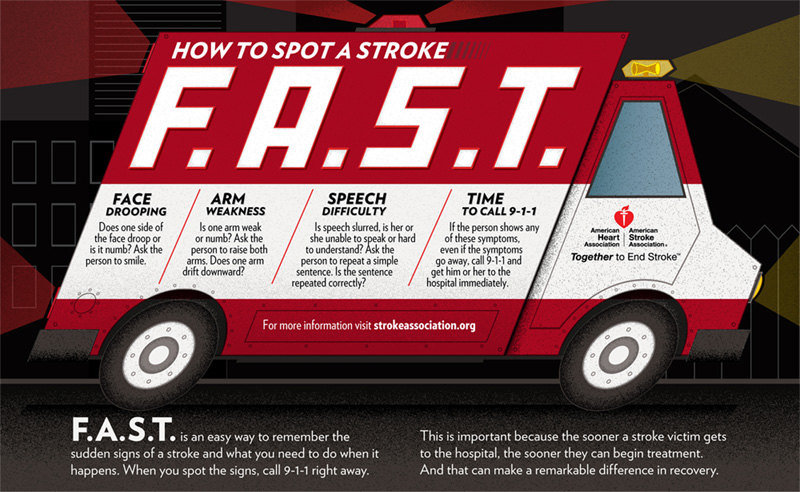
Think FAST
American Stroke Associaton says there’s an alternative test better at finding potentially dangerous holes in the Heart
March 8, 2014
 San Diego, CA – An alternative test for measuring blood flow to the brain detected a potentially dangerous hole within the heart of some patients with an unexplained stroke better than a standard test, according to late-breaking science presented at the American Stroke Association’s International Stroke Conference 2014.
In addition, the transcranial Doppler test could differentiate the risk of future stroke or transient ischemic attack as related to the severity of the defect. [Read more]
American Heart Association sets first guidelines for reducing stroke risks unique to women
February 10, 2014
Dallas, TX – For the first time, guidelines have been developed for preventing stroke in women.
“If you are a woman, you share many of the same risk factors for stroke with men, but your risk is also influenced by hormones, reproductive health, pregnancy, childbirth and other sex-related factors,” said Cheryl Bushnell, M.D., M.H.S., author of the new scientific statement published in the American Heart Association journal Stroke.
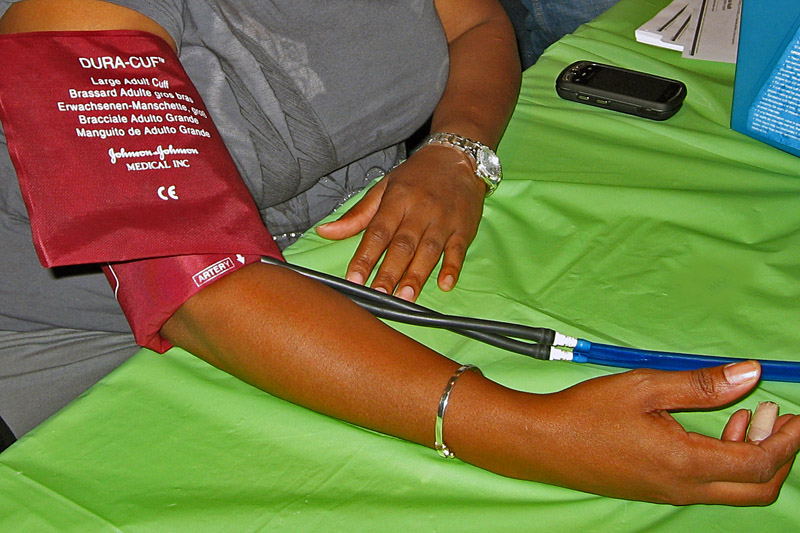
Blood Pressure Check. (American Heart Association)


