Studying Heart Disease after Death can help the Living
July 11, 2018
American Heart Association
 Dallas, TX – Autopsy is often an overlooked source of medical insight which may be hindering advances in cardiovascular medicine, according to new research published in a special issue of the American Heart Association’s journal Circulation.
“Autopsy is a source of discovery that informs the way we think about disease systemically,” said Jeffrey E. Saffitz, M.D., Ph.D., co-editor of the special issue and chair of the department of pathology at Beth Israel Deaconess Medical Center in Boston.”

Several papers in a special issue of Circulation offer insight into how autopsy contributes to answers about the causes of sudden cardiac death, information from implantable device to improve heart function, and identifying the original cause of atherosclerosis. (American Heart Association)
Gobbling your Food may harm your Waistline and Heart says American Heart Association
November 22, 2017
Anaheim, CA – People who eat slowly are less likely to become obese or develop metabolic syndrome, a cluster of heart disease, diabetes and stroke risk factors, according to preliminary research presented at the American Heart Association’s Scientific Sessions 2017, a premier global exchange of the latest advances in cardiovascular science for researchers and clinicians.

Faster eating speed was associated with more weight gain, higher blood glucose and larger waistline. (American Heart Association)
Black teens from Great Recession may have higher risk factors for heart disease, diabetes
September 20, 2017
Journal of the American Heart Association Report
Dallas, TX – African-American teens who lived through the Great Recession of 2007-2009 may have higher risk of metabolic syndrome, a common cluster of risk factors for heart disease and diabetes, according to new research in Journal of the American Heart Association, the Open Access Journal of the American Heart Association/American Stroke Association.
Researchers studied 328 African-Americans who had experienced the Great Recession of 2007-2009 as 16- and 17-year-olds living in nine rural counties in Georgia with high poverty rates and high rates of death from cardiovascular disease.
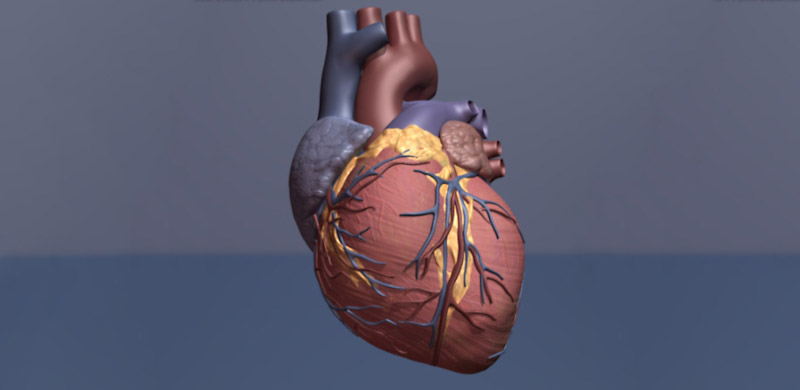
Black teens who lived through the Great Recession of 2007-2009 may have higher risk of metabolic syndrome, a cluster of several heart disease and diabetes risk factors. (American Heart Association)
Too little sleep may raise risk of death in people with cluster of Heart Disease risk factors
June 2, 2017
American Heart Association Rapid Access Journal Report
Dallas, TX – People with a common cluster of risk factors for heart disease and diabetes were approximately twice as likely to die of heart disease or stroke as people without the same set of risk factors if they failed to get more than six hours of sleep, according to a new observational study published in the association’s open access publication Journal of the American Heart Association. For those who got more sleep, the risk of death was more modest.
The study, funded in part by the American Heart Association, is the first to measure sleep duration in the laboratory rather than rely on patient reports and the first to examine the impact of sleep duration on the risk of death in those with a common cluster of heart disease risk factors.

Sleep and metabolic syndrome study. (American Heart Association)
American Heart Association says Heart Disease, Stroke Risk factors may increase in severity before Menopause
August 6, 2016
American Heart Association Rapid Access Journal Report
Dallas, TX – The severity of key risk factors for heart disease, diabetes and stroke appears to increase more rapidly in the years leading up to menopause, rather than after, according to new research in Journal of the American Heart Association, the Open Access Journal of the American Heart Association/American Stroke Association.
The study also found that this pattern of rapidly increasing risk factors before menopause appears to be more pronounced among African-American women.
As women go through menopause, doctors and other care providers can use this “teachable moment” to emphasize the importance of diet and exercise in reducing cardiovascular disease risk. (American Heart Association)
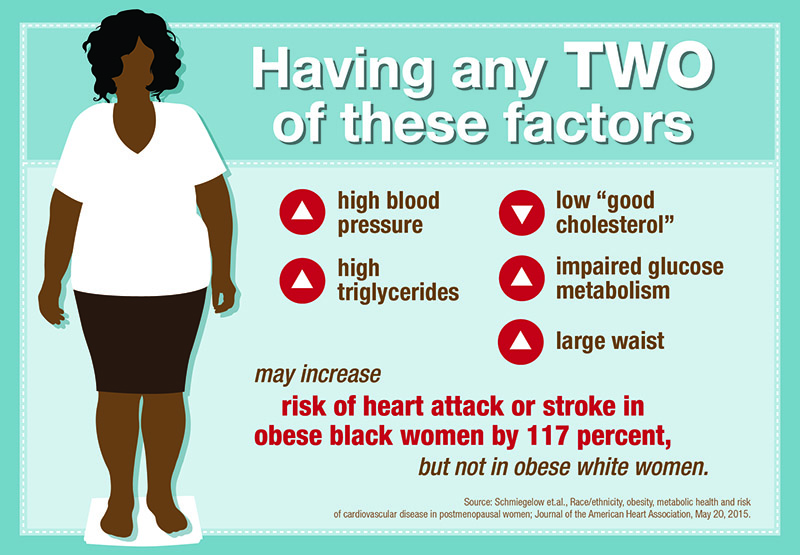
American Heart Association says Metabolic Abnormalities may increase Cardiovascular risk more in Black Women than in White Women
May 25, 2015
Large waistline, cholesterol disorders and other metabolic abnormalities may increase the relative risk of cardiovascular disease more among black women than among white women.
Dallas, TX – Large waistline, cholesterol disorders and other metabolic abnormalities may increase the risk of cardiovascular disease more among black women than among white women, according to new research in Journal of the American Heart Association.
Previous studies have focused primarily on white participants and found that obesity without a clustering of at least three metabolic disorders (metabolic syndrome) was not associated with increased cardiovascular disease risk.