


Exercise can significantly improve brain function after stroke according to American Heart Association
March 3, 2017
American Stroke Association Meeting Report
 Houston, TX – Structured exercise training can significantly improve brain function in stroke survivors, according to research presented at the American Stroke Association’s International Stroke Conference 2017.
Stroke is the fifth leading cause of death in the United States, and the leading cause of long-term disability. Studies estimate that up to 85 percent of people who suffer a stroke will have cognitive impairments, including deficits in executive function, attention and working memory.
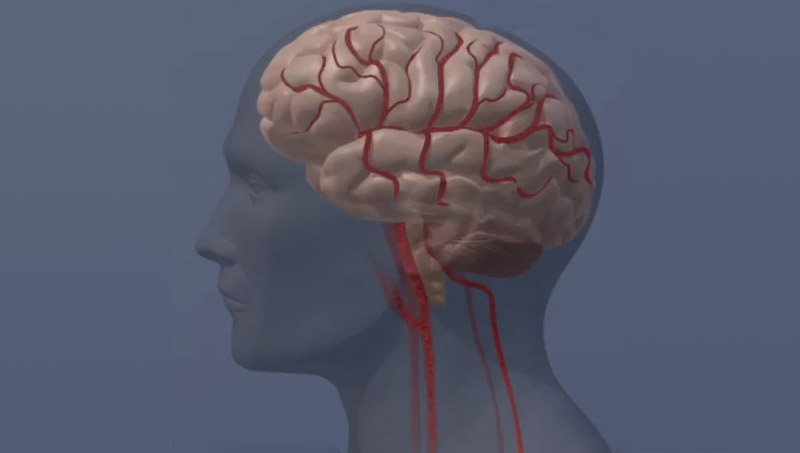
Structured physical activity training after a stroke effectively improves brain function. (American Heart Association)
American Heart Association says Memory lapses among highly educated may signal higher Stroke Risk
December 13, 2014
Dallas, TX – People with a high level of education who complain about memory lapses have a higher risk for stroke, according to new research in the American Heart Association journal Stroke.
“Studies have shown how stroke causes memory complaints,” said Arfan Ikram, M.D., associate professor of neuroepidemiology at Erasmus University Rotterdam in The Netherlands. “Given the shared underlying vascular pathology, we posed the reverse question: ‘Do memory complaints indicate an increased risk of strokes?’”

Brain Clot. (American Heart Association)
American Heart Association says Trans Fat Consumption is Linked to Diminished Memory in Working-aged Adults
November 24, 2014
Chicago, IL – High trans fat consumption is linked to worse memory among working-age men, according to research presented at the American Heart Association’s Scientific Sessions 2014.
In a recent study of approximately 1,000 healthy men, those who consumed the most trans fats showed notably worse performance on a word memory test. The strength of the association remained even after taking into consideration things like age, education, ethnicity and depression. [Read more]
American Stroke Association says common Infections may increase risk for Memory Decline
March 10, 2014
 San Diego, CA – Exposure to common infections is linked to memory and brain function — even if the infections never made you ill, according to research presented at the American Stroke Association’s International Stroke Conference 2014.
Researchers found an index of antibody levels caused by exposure to Chlamydia pneumoniae, Helicobacter pylori, cytomegalovirus, and herpes simplex viruses 1 and 2 was associated with worse cognitive performance, including memory, speed of mental processing, abstract thinking, planning and reasoning ability. [Read more]


