


American Heart Association says Weight loss surgery boosts good Cholesterol in obese Teen Boys
May 7, 2016
American Heart Association Meeting Report
 Nashville, TN – Weight loss surgery boosts the level of HDL “good” cholesterol and also improves its heart-protecting actions in severely obese teens, according to preliminary research presented at the American Heart Association’s Arteriosclerosis, Thrombosis and Vascular Biology | Peripheral Vascular Disease 2016 Scientific Sessions.
“We already knew that weight loss surgery improves weight and cholesterol numbers. This new research shows that there are actually changes in the way HDL functions in adolescents, which may lead to a reduction in long-term cardiovascular risk,” said pediatric endocrinologist Amy S. Shah, M.D., lead author of the study and assistant professor of pediatrics at the Cincinnati Children’s Hospital in Ohio.

Amy S. Shah, M.D., professor of pediatrics at the Cincinnati Children’s Hospital in Ohio. (Cincinnati Children’s Hospital Medical Center)
American Heart Association says Genetically inherited High Cholesterol twice as common as believed
March 15, 2016
American Heart Association Rapid Access Journal Report
Dallas, TX – Genetically inherited high levels of cholesterol are twice as common in the United States as previously believed, affecting 1 in 250 adults, according to new research in the American Heart Association’s journal Circulation.
The condition, familial hypercholesterolemia (FH), leads to severely elevated cholesterol levels from birth and is a leading cause of early heart attack.

Prepping the patient to draw blood for a cholesterol test. (American Heart Association)
American Heart Association says poor response to Cholesterol Drugs may indicate blocked Arteries
March 14, 2015
Dallas, TX – If your “bad” cholesterol level stays the same or increases after you take statin drugs, you may have more blocked arteries than people whose levels drop, according to research in the American Heart Association journal Arteriosclerosis, Thrombosis and Vascular Biology.
Low density lipoprotein (LDL) cholesterol is considered the “bad” cholesterol because it contributes to plaque buildup, thick, hard deposit that can clog arteries and make them less flexible. [Read more]
American Heart Association reports Heart-Healthy Diet helps Men lower Bad Cholesterol, regardless of Weight Loss
May 12, 2013
Nashville, TN – A heart-healthy diet helped men at high risk for heart disease reduce their bad cholesterol, regardless of whether they lost weight, in a study presented at the American Heart Association’s Arteriosclerosis, Thrombosis and Vascular Biology 2013 Scientific Sessions.
The 19 24- to 62-year-old men in the study had metabolic syndrome, which refers to three or more significant risk factors for heart disease and stroke. The risk factors included in this study were high waist circumference, high blood pressure, high levels of triglycerides and fasting glucose and low levels of high density lipoprotein or HDL “good” cholesterol. [Read more]
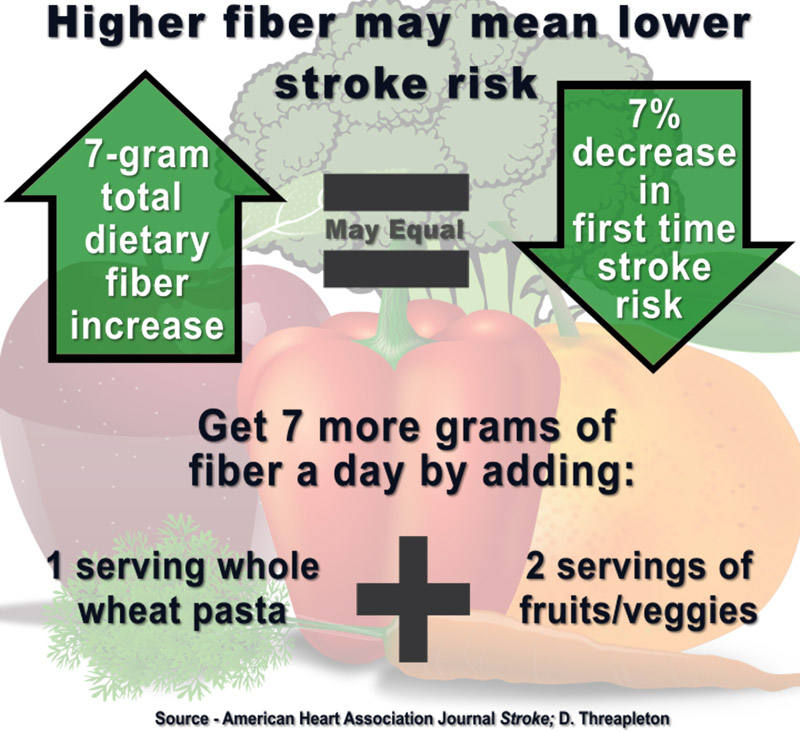
American Heart Association says eating more fiber may lower risk of first-time stroke
April 11, 2013
The results reinforce the importance of a diet that includes at least 25 grams of fiber daily.
Dallas, TX – Eating more fiber may decrease your risk of first-time stroke, according to new research in the American Heart Association journal Stroke.
Dietary fiber is the part of the plant that the body doesn’t absorb during digestion. Fiber can be soluble, which means it dissolves in water, or insoluble.
American Heart Association says Blood type may influence Heart Disease Risk
August 25, 2012
Genetics determine blood type, but a healthy lifestyle may help protect those with types A, B or AB.
Dallas, TX – People with blood type A, B, or AB had a higher risk for coronary heart disease when compared to those with blood type O, according to new research published in Arteriosclerosis, Thrombosis and Vascular Biology, an American Heart Association journal.
People in this study with the rarest blood type — AB, found in about 7 percent of the U.S. population — had the highest increased heart disease risk at 23 percent. Those with type B had an 11 percent increased risk, and those with type A had a 5 percent increased risk. About 43 percent of Americans have type O blood. [Read more]
Nontraditional cardiovascular risk factors common in overweight black youth
November 21, 2010
 Chicago, IL – Doctors should screen for non-traditional cardiovascular risk factors when assessing heart disease risk in overweight black adolescents, according to a new study from a Memphis researcher released at the American Heart Association’s Scientific Sessions today in Chicago.
Childhood obesity is linked to the development of cardiovascular disease and death in adulthood. However, black youth are not routinely assessed for cardiovascular risk factors. [Read more]


