


American Heart Association says Kicking the Salt Shaker habit may not be enough
May 18, 2017
American Heart Association Rapid Access Journal Report
 Dallas, TX – Restaurant foods and commercially processed foods sold in stores accounted for about 70 percent of dietary sodium intake in a study in three U.S. regions, according to new research in the American Heart Association’s journal Circulation.
Sodium is an important contributor to high blood pressure, one of the leading causes of heart attack and stroke. The American Heart Association recommends a maximum of 2,300 milligrams (mg) of sodium a day, which is equivalent to 1 teaspoon of salt.
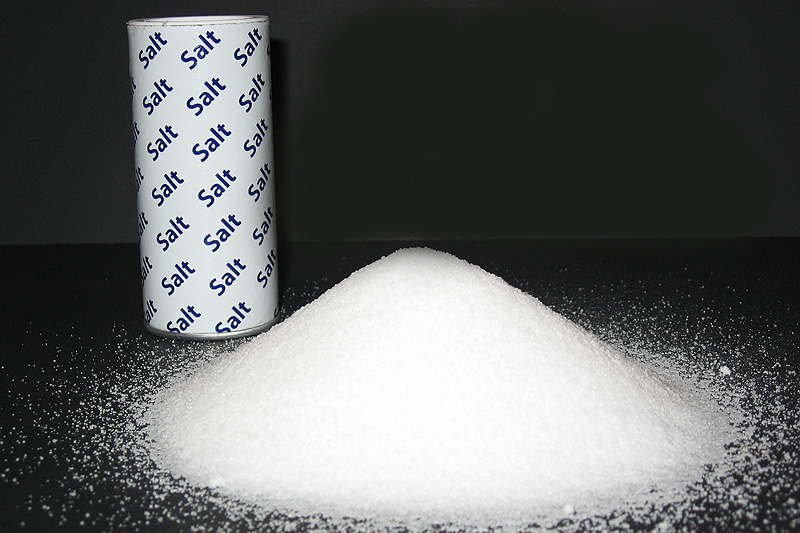
Salt added at home during food preparation or at the table accounted for a small fraction of dietary sodium. (Copyright American Heart Association)
U.S. Agriculture Secretary Tom Vilsack Highlights New “Smart Snacks in School” Standards
July 1, 2013
Will Ensure School Vending Machines, Snack Bars Include Healthy Choices
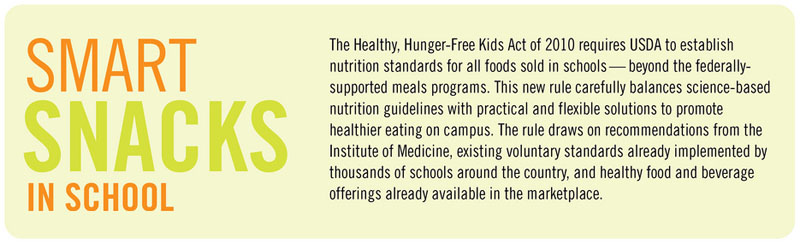
 Washington, D.C. – Agriculture Secretary Tom Vilsack announced that under USDA’s new ” Smart Snacks in School” nutrition standards, America’s students will be offered healthier food options during the school day.
“Nothing is more important than the health and well-being of our children,” said Secretary Vilsack. “Parents and schools work hard to give our youngsters the opportunity to grow up healthy and strong, and providing healthy options throughout school cafeterias, vending machines, and snack bars will support their great efforts.”
Calls for Lower Sodium Food Grow
February 3, 2012
Consumers Union Urges FDA to Limit Sodium Levels in Food
 Washington, D.C. – When it comes to sodium levels in food, consumers are asking the food industry for just a pinch. Nearly 7,000 consumers joined Consumers Union, the policy and advocacy division of Consumer Reports, in a recent petition supporting regulatory efforts to set national, industry-wide targets to reduce sodium in processed and restaurant foods. [Read more]


