


American Heart Association says Genetically inherited High Cholesterol increases long-term risks of Coronary Heart Disease and Stroke
July 2, 2016
American Heart Association Rapid Access Journal Report
 Dallas, TX – Patients who experience high cholesterol due to an inherited genetic disorder from one of their parents—heterozygous familial hypercholesterolemia— are much more likely than those with average cholesterol levels to have diseases caused by hardening of the arteries, including an accelerated onset of coronary heart disease by up to 30 years, according to new research in the American Heart Association journal Circulation.
The inherited form of high cholesterol—familial hypercholesterolemia—is a genetic disorder that is passed down through families.

Prepping the patient to draw blood for a cholesterol test. (American Heart Association)
American Heart Association says Genetically inherited High Cholesterol twice as common as believed
March 15, 2016
American Heart Association Rapid Access Journal Report
Dallas, TX – Genetically inherited high levels of cholesterol are twice as common in the United States as previously believed, affecting 1 in 250 adults, according to new research in the American Heart Association’s journal Circulation.
The condition, familial hypercholesterolemia (FH), leads to severely elevated cholesterol levels from birth and is a leading cause of early heart attack.
Prepping the patient to draw blood for a cholesterol test. (American Heart Association)
Tennessee Department of Health says Healthy Hearts Need Activity in Winter Months
February 23, 2016
TDH Offers Suggestions to Improve Heart Health
 Nashville, TN – Heart disease is the number one killer of adults in Tennessee and among its primary causes are poor diets and a lack of adequate physical activity.
The Tennessee Department of Health reminds individuals the winter months demand increased attention for heart health because short days and cold weather prompt many of us to crave comfy couches and calorie-rich, feel-good foods.

Walking outdoors.
Pregnancy in older age increases Stroke, Heart Attack risk years later
February 21, 2016
American Stroke Association Meeting Report
 Los Angeles, CA – Women who become pregnant at age 40 or older face a greater risk of stroke and heart attack later in life than women who become pregnant at a younger age, according to research presented at the American Stroke Association’s International Stroke Conference 2016.
“We already knew that older women were more likely than younger women to experience health problems during their pregnancy,” said Adnan I. Qureshi, M.D., lead researcher and director of the Zeenat Qureshi Stroke Institute in St. Cloud, Minnesota. “Now, we know that the consequences of that later pregnancy stretch years into the future.”

Women pregnant at age 40 or older face a greater risk of stroke and heart attack later in life than those pregnant at a younger age. (American Heart Association)
American Heart Association reports Obese Kids young as age 8 show signs of Heart Disease
November 16, 2015
Orlando, FL – Imaging tests of obese children — some as young as 8 years old — showed signs of significant heart disease and heart muscle abnormalities, according to research presented at the American Heart Association’s Scientific Sessions 2015.
Comparing 20 obese kids with 20 normal-weight kids, researchers found that obesity was linked to 27 percent more muscle mass in the left ventricle of their hearts and 12 percent thicker heart muscles – both signs of heart disease.
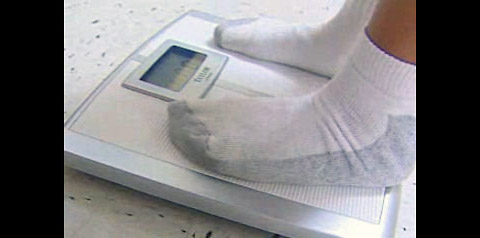
Child weighing himself on a scale. (American Heart Association)
American Heart Association says a few minutes of activity may cut Blood Pressure for people with Type 2 Diabetes
November 15, 2015
American Heart Association Meeting Report
Orlando, FL – Just a few minutes of light activity for people who sit most of the day – a short stroll or some squats at your desk every thirty minutes – can lower blood pressure for people with Type 2 diabetes, according to research presented at the American Heart Association’s Scientific Sessions 2015.
Researchers tracked blood pressure levels in 24 overweight and obese adults with Type 2 diabetes as they sat for eight hours. Participants either took 3-minute walking breaks averaging a speed about 2 miles per hour (mph) or did 3-minutes of simple resistance exercises every half-hour.
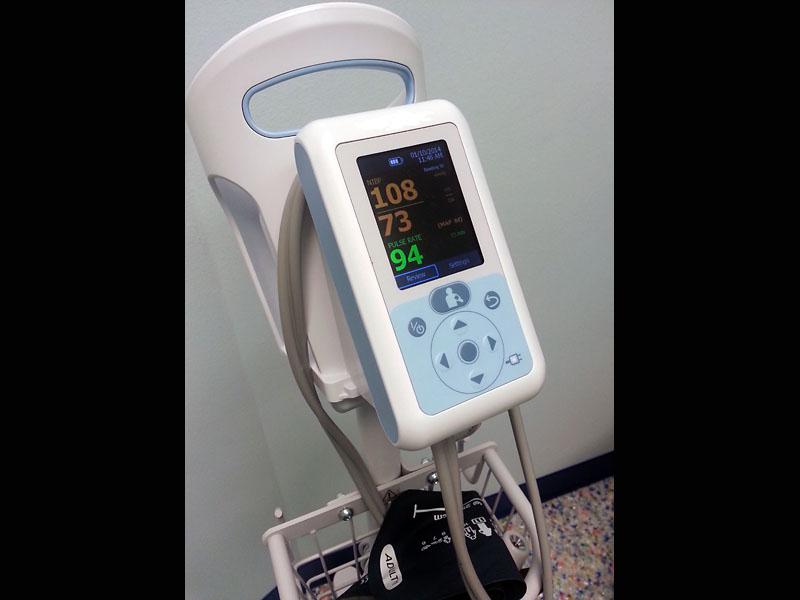
Blood pressure cuff. (American Heart Association)
American Heart Association says Mobile Technology may help people improve Health Behaviors
August 21, 2015
Dallas, TX – Smartphone applications and wearable sensors have the potential to help people make healthier lifestyle choices, but scientific evidence of mobile health technologies’ effectiveness for reducing risk factors for heart disease and stroke is limited, according to a scientific statement from the American Heart Association, published in the association’s journal Circulation.
The new statement reviewed the small body of published, peer-reviewed studies about the effectiveness of mobile health technologies (mHealth) for managing weight, increasing physical activity, quitting smoking and controlling high blood pressure, high cholesterol and diabetes.

Vegetables at the market. (American Heart Association)
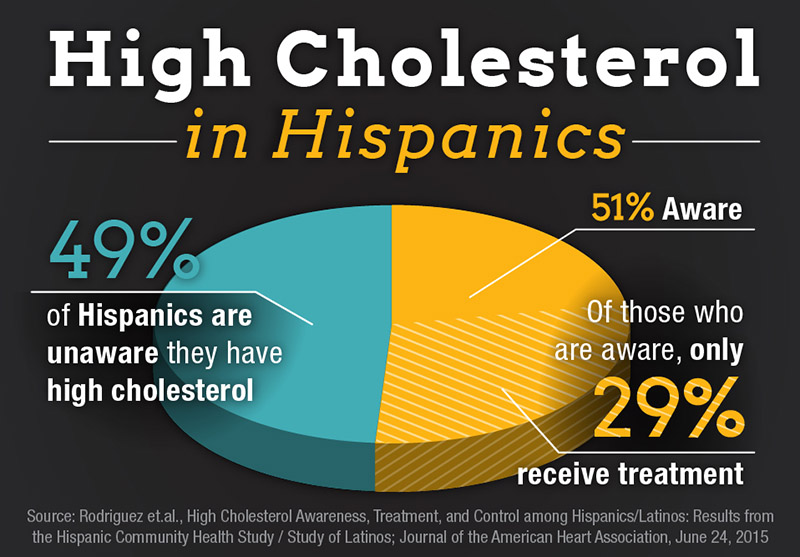
American Heart Association report shows nearly half of Hispanics unaware they have High Cholesterol; less than a third treated
July 5, 2015
Dallas, TX – Nearly half of Hispanic adults were unaware they have high cholesterol, and less than a third receive any kind of cholesterol treatment, in a new study in Journal of the American Heart Association.
Hispanics are one of the fastest growing ethnic groups in America, with 52 million among the U.S. population, yet their awareness and management of high cholesterol lags behind other ethnic groups.
Tennessee Department of Health encourages everyone to prevent Heart Attacks
February 26, 2015
 Nashville, TN – The Tennessee Department of Health reminds everyone to make heart health a top priority during American Heart Month and throughout the year. Heart disease is the leading cause of death in the United States and the number one killer of women.
“Heart disease is something everyone should take very seriously, and there are many things we can do to reduce our risk,” said Carolyn Wester, MD, MPH, Deputy Medical Director for the TDH Division of Family Health and Wellness. “If you have symptoms of a heart attack, seek help immediately. Every second counts.”
[youtube]https://www.youtube.com/watch?v=Y1WMbRoMuR0[/youtube] [Read more]
American Heart Association says High Cholesterol during young adulthood raises Heart Disease Risk
January 28, 2015
Dallas, TX – New research in the American Heart Association’s journal Circulation shows that long-term exposure to elevated cholesterol substantially increases lifetime risk for heart disease. For every ten years you have even mildly elevated cholesterol between the ages of 35 and 55, your risk of heart disease may be increased by nearly 40 percent.
“Our findings suggest that they [adults with longstanding mild to moderately [taken from the manuscript] elevated cholesterol levels] may benefit from more aggressive prevention strategies earlier,” said lead study author Ann Marie Navar-Boggan, M.D., Ph.D, and cardiology fellow at the Duke Clinical Research Institute in Durham, NC. [Read more]


