


American Heart Association reports Cocaine users experience Abnormal Blood Flow, risk Heart Disease
November 21, 2014
 Chicago, IL – Cocaine users complaining of chest pain may have abnormal blood flow in the heart’s smallest blood vessels that may not be detected in regular testing, putting these patients at risk for heart complications or death, according to research presented at the American Heart Association’s Scientific Sessions 2014.
“Cocaine use is unfortunately very common, and we see many emergency room admissions because patients experience chest pain following cocaine use,” said Varun Kumar, M.D., lead study author and an internist at Mount Sinai Hospital in Chicago. [Read more]
American Heart Association says High blood pressure ER visits jumped 25 percent in 2006-11
September 14, 2014
San Francisco, CA – The number of people going to the emergency room for essential hypertension, high blood pressure with no known cause, increased by 25 percent in recent years, according to a study presented at the American Heart Association’s High Blood Pressure Research Scientific Sessions 2014.
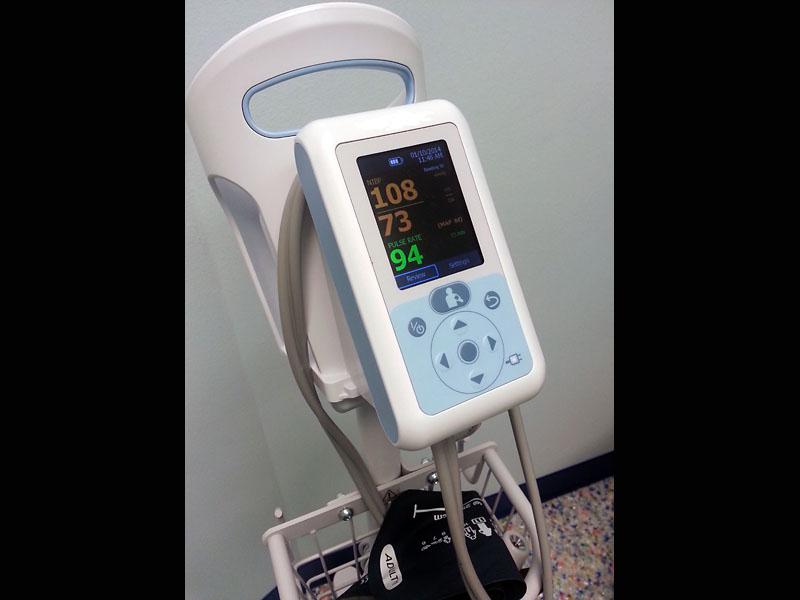
Blood pressure cuff. (American Heart Association)
American Heart Association says an hour of Moderate Exercise a day may decrease Heart Failure Risk
September 3, 2014
Dallas, TX – Exercising each day can help keep the doctor away.
In a new study reported in the American Heart Association journal Circulation: Heart Failure, researchers say more than an hour of moderate or half an hour of vigorous exercise per day may lower your risk of heart failure by 46 percent.

The more active you are, the greater your protection from heart failure. (American Heart Association)
American Heart Association says adolescents’ poor health behaviors raise risk of heart disease as adults
April 12, 2013
More than 80 percent of them had a poor diet and many were not physically active.
Dallas, TX – U.S. adolescents’ high levels of poor health behaviors and unfavorable cardiovascular risk factors may increase their chances of heart disease as adults, according to new research in the American Heart Association journal Circulation.
Researchers estimated the current state of cardiovascular health of U.S. adolescents based on the seven cardiovascular health components defined in the American Heart Association’s 2020 impact goals, which include both health behaviors and factors: blood pressure, total cholesterol, body mass index (BMI), blood glucose, healthy diet, physical activity and smoking. The 4,673 adolescents were 12-to 19-years-old and represented about 33.2 million adolescents nationally.

Poor diet in adolescents can raise risk of heart disease later in life. (American Heart Association)


