


Out-of-Hospital Cardiac Arrest third leading cause of Disease-Related Health Loss
April 20, 2019
Circulation: Cardiovascular Quality and Outcomes Journal Report
 Dallas, TX – Out-of-hospital cardiac arrest was the third leading cause of “health loss due to disease” in the United States behind ischemic heart disease and low back/neck pain in 2016, according to new research in Circulation: Cardiovascular Quality and Outcomes, an American Heart Association journal.
This groundbreaking study is the first to estimate disability-adjusted life years (DALY) – which measures the sum of years of life lost prematurely and years lived with disability due to a disease – among those who experienced non-traumatic out-of-hospital cardiac arrest in the United States.

Wall mounted AED with emergency phone. (American Heart Association)
American Heart Association says New Process designed to streamline faster care for EMS Triage, transport of Stroke Patients
March 30, 2017
Dallas, TX – A new process, developed by the American Heart Association/ American Stroke Association, will help streamline the initial emergency care of stroke patients.
The new Severity-based Stroke Triage Algorithm for emergency medical services (EMS) equips ambulance crews with information and tools to better identify a stroke, assess a patient’s overall condition and determine the best hospital for the patient’s specific treatment needs.
Getting the right treatment fast can help improve patient outcomes. (American Heart Association)
American Heart Association says Coordinated Response cuts time to treatment for deadly Heart Attacks
August 3, 2016
American Heart Association Rapid Access Journal Report
Dallas, TX – When emergency medical services (EMS) and hospital providers worked together in a coordinated system, people suffering deadly heart attacks received life-saving treatment sooner, according to a new study in the American Heart Association’s journal Circulation.
Often considered the most deadly type of heart attack, ST segment elevation myocardial infarction, or STEMI, happens when the blood supply to the heart is completely blocked. Quickly opening the blocked artery can restore normal blood flow, minimize heart damage and save lives.
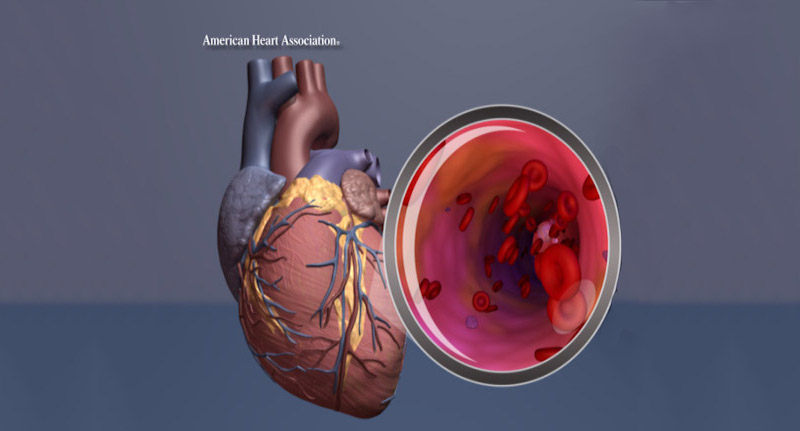
Treatment response times improved the most when patients were taken by EMS directly to hospitals that could perform the procedure to open blocked heart arteries. (American Heart Association)
Tennessee Department of Health says Hypothermia is a Significant Health Threat
February 24, 2015
 Nashville, TN – The Tennessee Department of Health and the Tennessee Emergency Management Agency are warning residents that alcohol and certain drugs increase the risk for hypothermia.
The condition occurs when the body’s core temperature drops to 95° or lower and its effects can be deadly.
A total of 13,419 hypothermia-related fatalities were recorded in the U.S. in the last decade. [Read more]
Tennessee Department of Health Issues Extreme Heat Warning
August 23, 2014
Nashville, TN – The Tennessee Department of Health is working to reduce deaths and life-threatening conditions caused by summer heat. With temperatures reaching into the 90s in much of the state, Tennessee residents and visitors are urged to exercise caution and take preventive steps to avoid heat exhaustion and heat stroke.
“While the elderly, children and those with existing health issues are most at risk, extreme heat can affect anyone,” said TDH Commissioner John J. Dreyzehner, MD, MPH. “We want to remind everyone about ways to prevent heat-related illnesses and how to address them if they do occur.” [Read more]
American Heart Association’s Lifeline program to be implemented across Tennessee to fight most serious type of Heart Attack
May 12, 2014
Nashville, TN – Mission: Lifeline, the American Heart Association’s community-based initiative aimed at improving the system of care for heart attack patients, will be implemented across the state of Tennessee.
Every year in the United States, nearly 250,000 people experience ST-Elevation Myocardial Infarction (STEMI), the deadliest type of heart attack, in which blood flow is completely blocked to a portion of the heart. Timely treatment is essential: time is muscle and time is lives.
Tennessee Highway Patrol reminds Motoriest to Never Leave Children in Unattended Vehicles
June 12, 2013
 Nashville, TN – In just the first six months of this year, 10 children have lost their lives in the United States due to hyperthermia. That’s why the Tennessee Highway Patrol is educating the public on the dangers of leaving children in unattended vehicles. State Troopers are urging motorists to take extra precautions as temperatures rise throughout the summer months.
In 2012, there were 32 juvenile vehicular hyperthermia fatalities nationwide. Of that figure, five of the hyperthermia-related deaths were in Tennessee. Those deaths occurred in Nashville (8/7/12), Smyrna (8/2/12) and Cleveland, Tennessee (6/28/12). (Source: San Francisco State University).
American Heart Association reports one in three Stroke Emergencies don’t use EMS
May 9, 2013
Those living in Southern states were less likely to call 9-1-1 than their Northern counterparts.
Dallas, TX – More than a third of stroke patients don’t get to the hospital by ambulance, even though that’s the fastest way to get there and the quickest way to get vital treatment, according to new research in Circulation: Cardiovascular Quality and Outcomes, an American Heart Association journal.
Researchers studied records on more than 204,000 stroke patients arriving at emergency rooms at 1,563 hospitals participating in the American Heart Association/American Stroke Association’s Get With The Guidelines®-Stroke quality improvement program in 2003-10.
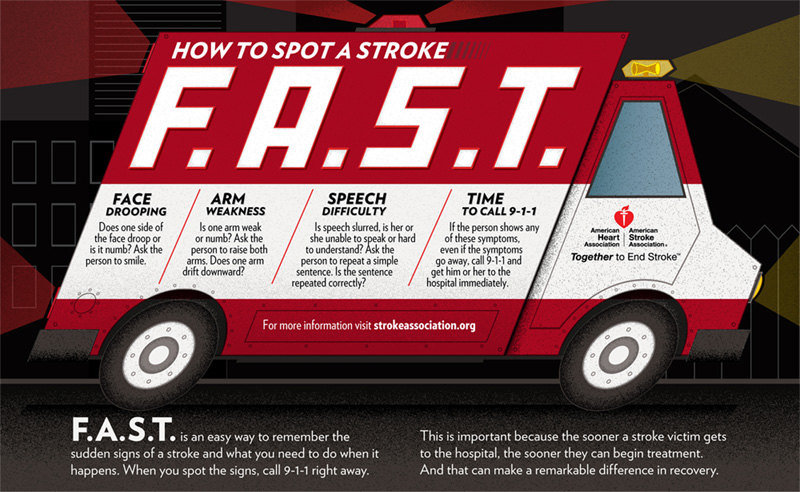
Think FAST
American Heart Association says despite benefit, hospitals alerted about incoming stroke patients only 2/3 of the time
July 14, 2012
Researchers say improved stroke care systems can address geographical and other factors affecting EMS pre-notification.
Dallas, TX – Treatment is delivered faster when emergency medical services (EMS) personnel notify hospitals a possible stroke patient is en route, yet pre-notification doesn’t occur nearly one-third of the time.
That’s according to two separate Get With The Guidelines®– Stroke program studies published in American Heart Association journals.
The American Heart Association/American Stroke Association recommends EMS notify hospitals of incoming stroke patients to allow stroke teams to prepare for prompt evaluation and treatment. [Read more]
9-1-1 dispatchers can save more lives by coaching bystanders in CPR
January 10, 2012
Dallas, TX – More people will survive sudden cardiac arrest when 9-1-1 dispatchers help bystanders assess victims and begin CPR immediately, according to a new American Heart Association scientific statement published in Circulation: Journal of the American Heart Association.
In the 2010 resuscitation guidelines, the association advised 9-1-1 dispatchers to help bystanders assess anyone who may have had a cardiac arrest and then direct them to begin CPR. [Read more]


