


Mono-unsaturated fats from plants, not animals may reduce risk of death from heart disease and other causes
April 19, 2018
American Heart Association Meeting Report
 New Orleans, LA – Diets rich in mono-unsaturated fatty acids from plants were associated with a lower risk of dying from heart disease or other causes compared to diets rich in mono-unsaturated fats from animals, which were linked to a higher risk of death from heart disease or other causes, according to preliminary research presented at the American Heart Association’s Epidemiology and Prevention | Lifestyle and Cardiometabolic Health Scientific Sessions 2018, a premier global exchange of the latest advances in population based cardiovascular science for researchers and clinicians.

The largest reductions in the risk of death were found when healthy fats from plant sources replaced saturated fats, trans fats and refined carbohydrates. (Amnerican Heart Association)
Healthy diet may reduce high blood pressure risk in pregnancy-related diabetes
May 2, 2016
Dallas, TX – Women with pregnancy-related diabetes (gestational diabetes) are at greater risk of developing high blood pressure later in life; however, a healthy diet may significantly reduce that risk, according to new research in the American Heart Association’s journal Hypertension.
Researchers studied 3,818 women with a history of pregnancy-related diabetes enrolled in the Nurses’ Health Study II as a part of the ongoing Diabetes & Women’s Health Study. Over 22 years of follow-up, 1,069 women developed high blood pressure, which in turn increased their risk of having a heart attack or stroke.

A healthy diet may reduce the risk that women with pregnancy-related diabetes will develop high blood pressure later in life. (American Heart Association)
American Heart Association reports Irregular Sleeping Pattern may affect how Teens Eat
March 17, 2015
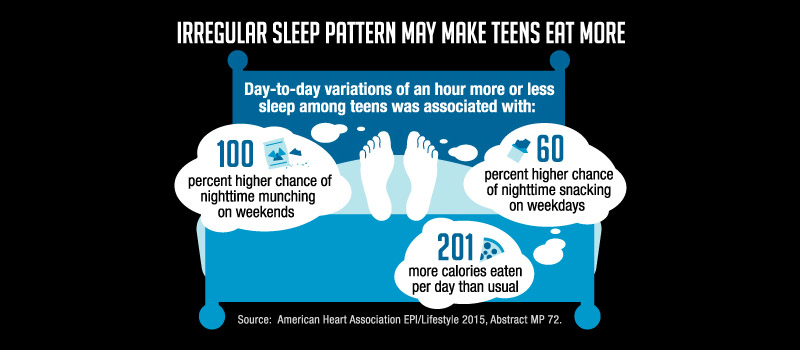
Dallas, TX – Day-to-day changes in how long your teen sleeps at night might be affecting how much they eat, according to new research presented at the American Heart Association EPI/Lifestyle 2015 meeting.
Penn State researchers looked at data on 342 teenagers and analyzed their sleeping habits. On average, they slept about seven hours nightly. But when the amount of time teens slept varied by an hour – whether it was less sleep or more.
American Heart Association says skipping Breakfast may increase Coronary Heart Disease Risk
July 24, 2013
The timing of meals, whether it’s missing a meal in the morning or eating a meal very late at night, may cause adverse metabolic effects that lead to coronary heart disease.
Dallas, TX – Here’s more evidence why breakfast may be the most important meal of the day: Men who reported that they regularly skipped breakfast had a higher risk of a heart attack or fatal coronary heart disease in a study reported in the American Heart Association journal Circulation.
Researchers analyzed food frequency questionnaire data and tracked health outcomes for 16 years (1992-2008) on 26,902 male health professionals ages 45-82. [Read more]
American Heart Association reports Heart-Healthy Diet helps Men lower Bad Cholesterol, regardless of Weight Loss
May 12, 2013
Nashville, TN – A heart-healthy diet helped men at high risk for heart disease reduce their bad cholesterol, regardless of whether they lost weight, in a study presented at the American Heart Association’s Arteriosclerosis, Thrombosis and Vascular Biology 2013 Scientific Sessions.
The 19 24- to 62-year-old men in the study had metabolic syndrome, which refers to three or more significant risk factors for heart disease and stroke. The risk factors included in this study were high waist circumference, high blood pressure, high levels of triglycerides and fasting glucose and low levels of high density lipoprotein or HDL “good” cholesterol. [Read more]
Jenny Craig rated Best Diet; Weight Watchers scores a distant Third
May 11, 2011
 Yonkers, NY – Jenny Craig, the diet program that combines counseling with a portion-controlled regimen of pre-made foods supplemented by home cooked sides, has been designated a Ratings winner by Consumer Reports Health. With an overall score of 85, Jenny Craig easily surpassed the popular Weight Watchers (57) program by nearly 30 points.
The diet Ratings are based on adherence to nutritional guidelines set forth by the 2010 U.S. Dietary Guidelines for Americans, and weight loss and drop-out rates, both short-term and long-term, derived from published clinical trials. And that’s where Jenny Craig excelled. In a 332-person, two-year study of the program published in the Journal of the American Medical Association, 92 percent of participants stuck with Jenny Craig for two years, a remarkable level of adherence. As a result, those participants shaved off an average of about 8 percent of their weight. [Read more]


