Abuse and adversity in childhood linked to more cardiovascular risk in adulthood
December 19, 2017
American Heart Association Scientific Statement
 Dallas, TX – Children and teens who are abused, witness violence, are bullied or face other adversities are more likely to develop cardiovascular diseases in adulthood, according to a new scientific statement by the American Heart Association published in the Association’s journal Circulation.
The statement is based on a review of existing scientific research published in peer-reviewed medical journals that documents a strong association between adverse experiences in childhood and teen years and a greater likelihood of developing risk factors such as obesity, high blood pressure and type 2 diabetes earlier than those not experiencing adverse experiences.

Children and teens who experience abuse, bullying, neglect or witness violence and other forms of adversity are more likely to develop heart and blood vessel diseases as adults. (American Heart Association)
Scholastic to Publish Teen Author Aija Mayrock’s “Survival Guide to Bullying”
February 18, 2015
 New York, NY – Scholastic, the global children’s publishing, education and media company, has acquired North American rights to 19-year-old Aija Mayrock’s self-published ebook,
The Survival Guide to Bullying. The revised Scholastic edition (The Survival Guide to Bullying: Revised Edition) will be published simultaneously in paperback and ebook formats in July 2015, with a hardcover library edition to follow in September 2015. The deal was negotiated by Debra Dorfman, VP and Publisher, Scholastic, and Jay Kramer for Aija Mayrock.
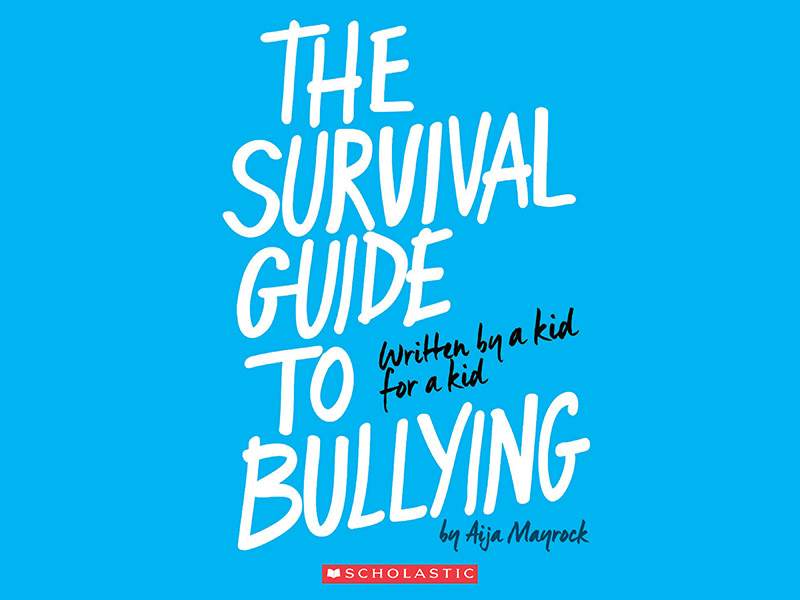
“The Survival Guide to Bullying” by Aija Mayrock (Scholastic)
What You Can Do About Bullying in School
August 22, 2013
 Washington, D.C. – Bullying can threaten students’ physical and emotional safety at school and can negatively impact their ability to learn. The best way to address bullying is to stop it before it starts. There are a number of things school staff can do to make schools safer and prevent bullying.
Assess school prevention and intervention efforts around student behavior, including substance use and violence. You may be able to build upon them or integrate bullying prevention strategies. Many programs help address the same protective and risk factors that bullying programs do.