


Counties with Dirtier Air have more Stroke Deaths
February 28, 2019
American Stroke Association
 Dallas, TX – In a nationwide study, counties with dirtier air had higher rates of stroke deaths and shorter life expectancies, according to preliminary research to be presented in Honolulu at the American Stroke Association’s International Stroke Conference 2019, a world premier meeting for researchers and clinicians dedicated to the science and treatment of cerebrovascular disease.
Researchers examined the average yearly levels air pollution (PM2.5) that contains fine inhalable particles.

About half of U.S. counties have annual air pollution levels that exceed guidelines from the Environmental Protection Agency. (American Heart Association)
American Heart Association says In-Womb Air Pollution Exposure associated with Higher Blood Pressure in Childhood
May 25, 2018
Hypertension Journal Report
 Dallas, TX – Children who were exposed to higher levels of air pollution during the third trimester of their mother’s pregnancy had a higher risk of elevated blood pressure in childhood, according to new research in the American Heart Association’s journal Hypertension.
Fine particulate matter of 2.5 microns or less (PM2.5) is a form of air pollution produced by motor vehicles and the burning of oil, coal and biomass, and has been shown to enter the circulatory system and negatively affect human health.

Children who were exposed to higher levels air pollution while in the womb had a higher risk of elevated blood pressure in childhood. (American Heart Association)
American Heart Association reports Air pollution linked to Cardiovascular Disease; Air Purifiers may lessen impact
August 28, 2017
Circulation Journal Report
Dallas, TX – Exposure to high levels of air pollution increased stress hormone levels and negative metabolic changes in otherwise healthy, young adults in a recent study conducted in China. Air purifiers appeared to lessen the negative effects, according to new research published in the American Heart Association’s journal Circulation.
Researchers focused on fine particulate matter (PM2.5) – a component of air pollution emitted from vehicles, factories, power plants, fires and smoking – because many studies have suggested this type of major air pollutant might lead to cardiovascular and metabolic health consequences, according to Haidong Kan, M.D., Ph.D., study author and professor of environmental health sciences at Fudan University in Shanghai, China.
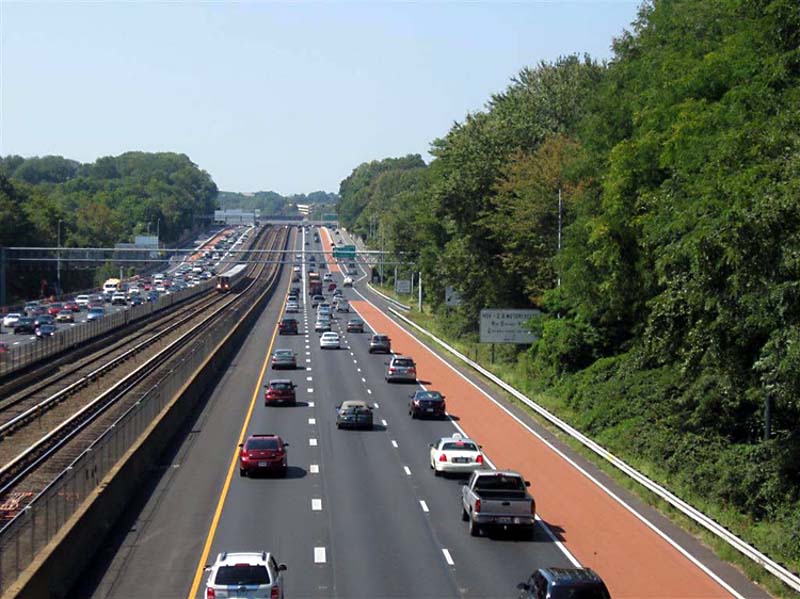
Negative effects of pollution exposure decreased after using indoor air purifiers over a 9-day period.
American Heart Association says “Bad” air may impact “Good” Cholesterol increasing Heart Disease Risk
April 16, 2017
Arteriosclerosis, Thrombosis, and Vascular Biology Journal Report
Dallas, TX – Traffic-related air pollution may increase cardiovascular disease risk by lowering levels of high-density lipoprotein (HDL), commonly known as “good” cholesterol, according to new research in the American Heart Association’s journal Arteriosclerosis, Thrombosis, and Vascular Biology.
Scientists have long known that air pollution increases the risk of developing cardiovascular diseases including atherosclerosis and heart failure, but are uncertain how the two are connected.
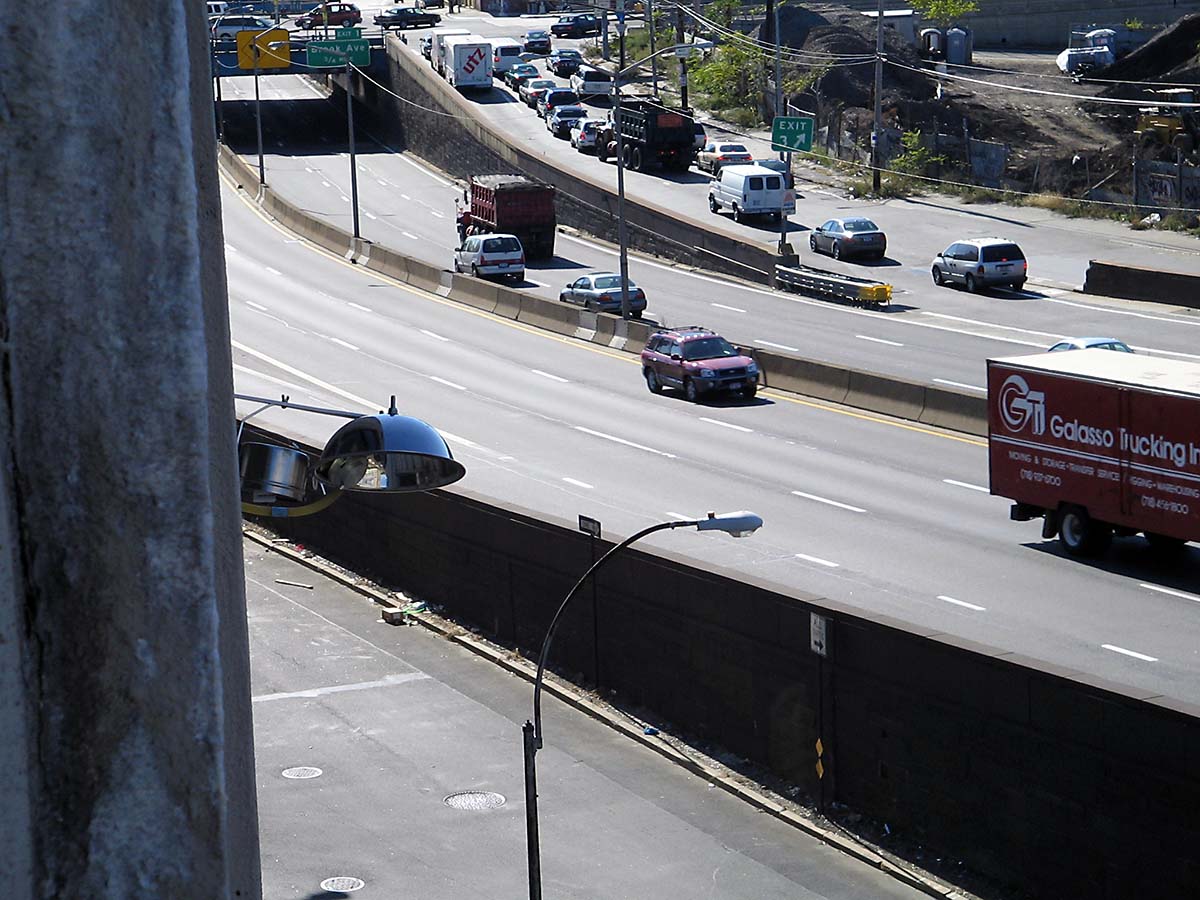
(At left), Air quality equipment monitors traffic-related air pollution on a New York City highway. (The MESA Air Study)
Air Pollution linked to Blood Vessel damage in Healthy Young Adults
October 28, 2016
American Heart Association Rapid Access Journal Report
Dallas, TX – Fine particulate matter air pollution may be associated with blood vessel damage and inflammation among young, healthy adults, according to new research in Circulation Research, an American Heart Association journal.
“These results substantially expand our understanding about how air pollution contributes to cardiovascular disease by showing that exposure is associated with a cascade of adverse effects,” said C. Arden Pope, Ph.D., study lead author and Mary Lou Fulton Professor of Economics at Brigham Young University in Provo, Utah.
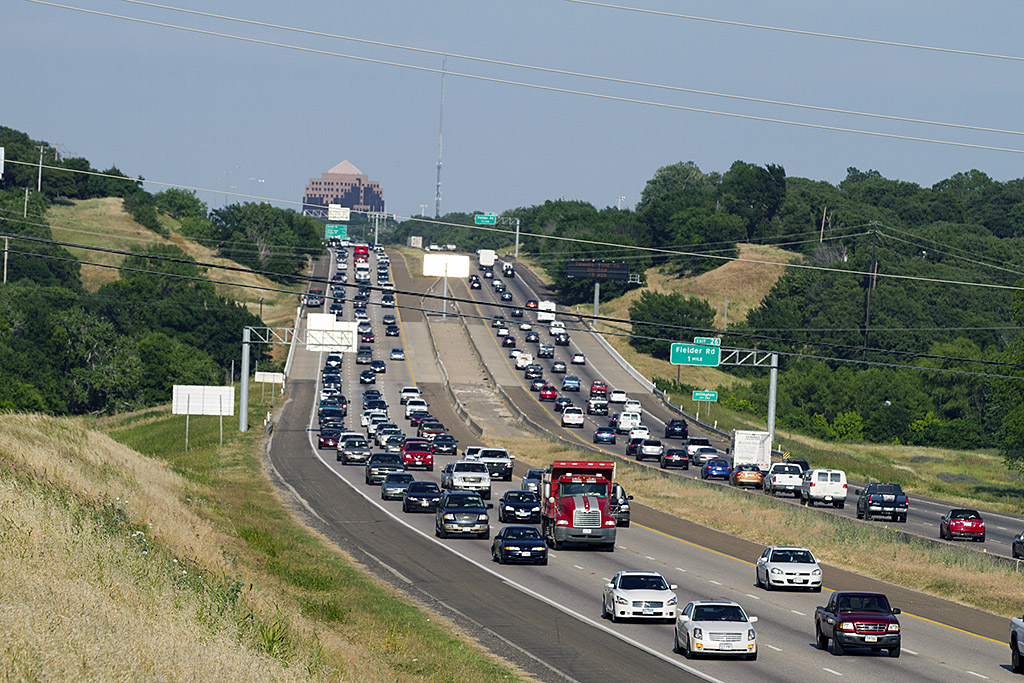
Traffic on the highway. (American Heart Association)
American Heart Association says Household Air Pollution linked to Higher Risk of Heart Attacks, Death
June 15, 2016
American Heart Association Rapid Access Journal Report
Dallas, TX – Long-term exposure to household air pollution from lighting, cooking or heating with fuels, such as kerosene or diesel, may increase the risk of heart attacks and death, according to new research in the American Heart Association’s journal Circulation.
Burning cleaner fuels, such as natural gas, was associated with a lower risk of cardiovascular deaths.
According to the World Health Organization, one-half of the world’s population lives in poverty and burns fuels for lighting, cooking and heating purposes.

Heart illustration with artery close up. (American Heart Association)
American Heart Association says Air pollution from Wildfires may ignite Heart Hazards
July 16, 2015
Dallas, TX – Air pollution from wildfires may increase risk for cardiac arrests, and other acute heart problems, according to new research published in the Journal of the American Heart Association.
“While breathing wildfire smoke is linked to respiratory problems such as asthma, evidence of an association between wildfire smoke exposure and heart problems has been inconsistent,” said Anjali Haikerwal, B.Sc., M.B.B.S., M.P.H., study author and a doctoral candidate at the School of Public Health & Preventive Medicine at Monash University in Melbourne, Australia.

Heart Illustration. (American Heart Association)
American Heart Association says Living near major roads may increase risk of sudden Cardiac Death in Women
October 22, 2014
Dallas, TX – Living close to a major road may increase women’s risk of dying from sudden cardiac death, according to new research in the American Heart Association journal Circulation.
“It’s important for healthcare providers to recognize that environmental exposures may be under-appreciated risk factors for diseases such as sudden cardiac death and fatal coronary heart disease,” said Jaime E. Hart, Sc.D., study lead author and an instructor in medicine at Brigham and Women’s Hospital and Harvard Medical School in Boston, Massachusetts. “On a population level, living near a major roadway was as important a risk factor as smoking, diet or obesity.”

Living near a major road was associated with an increased risk of sudden cardiac death in women. (American Heart Association)
American Heart Association reports New evidence links ozone exposure to potential heart attacks
June 26, 2012
Young, healthy adults exposed to ozone for two hours developed changes in their cardiovascular system which could explain a possible link between ozone exposure and death.
Dallas, TX – Young, healthy adult volunteers exposed for two hours to ozone developed physiological changes associated with cardiovascular ailments, according to a small study reported in Circulation, an American Heart Association journal.
Study participants showed evidence of vascular inflammation, a potential reduced ability to dissolve artery-blocking blood clots, and changes in the autonomic nervous system that controls the heart’s rhythm. The changes were temporary and reversible in these young, healthy participants. [Read more]
American Heart Association says Death risks higher for heart attack survivors living near major roadways
May 20, 2012
Dallas, TX – Heart attack survivors who live about 100 meters (328 feet) or less from a major U.S. roadway face increased risk of death from all causes, according to new research in the American Heart Association’s journal Circulation.
“We think there is exposure to a combination of air pollution near these roadways and other exposure, such as excessive noise or stress from living close to the roadway, that may contribute to the study findings,” said Murray A. Mittleman, M.D., Dr.PH, study author and director of the Cardiovascular Research Unit at Beth Israel Deaconess Medical Center in Boston, MA. [Read more]


