 Los Angeles, CA – Adult stroke patients who are employed prior to and after suffering strokes [1] are more likely than unemployed adults to have healthier minds two years post stroke, according to preliminary research presented at the American Stroke Association’s International Stroke Conference 2018, a world premier meeting dedicated to the science and treatment of cerebrovascular disease for researchers and clinicians.
 [2]
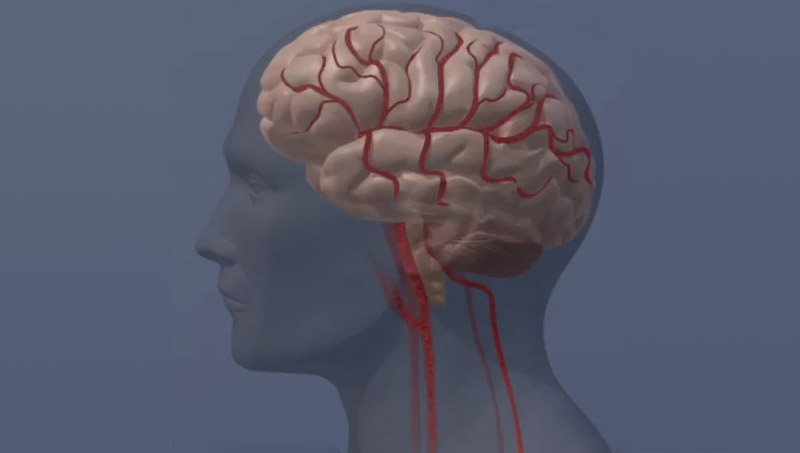
[2]Those who work after stroke also seem to benefit with better long-term cognitive status than those who don’t. (American Heart Association)
“Studies have shown stroke greatly increases dementia risk, and occupational status might influence how stroke survivors fare years after having a stroke,” said study author Einor Ben Assayag, Ph.D., senior researcher in the neurology department at Tel-Aviv Sorasky Medical Center, Tel-Aviv, Israel. “We looked at how occupational status, brain health and cognitive decline might be interrelated after stroke.”
Ben Assayag and colleagues studied 252 working-age adult stroke survivors from the TABASCO study. They analyzed brain health early on after stroke, as well as cognitive changes, at one year and two years after stroke. “A novel aspect of this study was we also studied the association of inflammation with occupational status and cognitive changes after stroke,” she said.
They found:
- People who were unemployed before stroke were more than three times (320 percent) more likely than those who were employed to develop cognitive decline within two years from the initial stroke.
- In addition to having lower cognitive results post-stroke, those who were unemployed before stroke were more likely to have worse neurological deficit, higher depression scores and more elevated inflammation.
- Adults who weren’t working before having a stroke were more likely to have unhealthy brain changes defined as reduced cortical thickness and white matter volume on imaging studies.
- Those who were unemployed prior to stroke were more likely to have type 2 diabetes and high blood pressure.
- During the two years of the study, 4.4 percent of participants died and 8.9 percent developed cognitive decline.
- Returning to work after stroke was associated with lower cognitive decline risk.
“The message here is ‘keep on working,’” Ben Assayag said. “Rates of death and cognitive decline were higher among the unemployed people we studied. In fact, being unemployed was by itself a risk factor for cognitive decline and death.”
A limitation of the study is that it included only mild stroke or transient ischemic attack [3] (TIA) patients, and not people with more severe strokes.
Co-authors are Hen Hallevi, M.D.; Jeremy Molad, M.D.; Amos Korczyn, M.D., M.Sc.; Efrat Kliper, Ph.D.; Ludmila Shopin, M.D.; Eitan Auriel, M.D., M.Sc.; Shani Shenhar-Tsarfaty, Ph.D.; Victoria Volfson, M.Sc.; and Natan M. Bornstein, M.D. Author disclosures are on the abstract.
The American Federation for Aging Research and U.S.-Israel Bi-National Science Foundation funded the study.
Additional Resources:
- For more news at AHA International Stroke Conference 2018, follow us on Twitter @HeartNews [4] #ISC18.