 Nashville, TN – A horse in West Tennessee has tested positive for Eastern Equine Encephalitis (EEE), a virus that can be fatal for horses and humans. The Tennessee Departments of Agriculture and Health are advising citizens to take precautions to protect themselves and their livestock.
Mosquitoes transmit EEE. Humans cannot contract these viral infections directly from infected horses. However, mosquito-borne diseases do pose a public health risk.
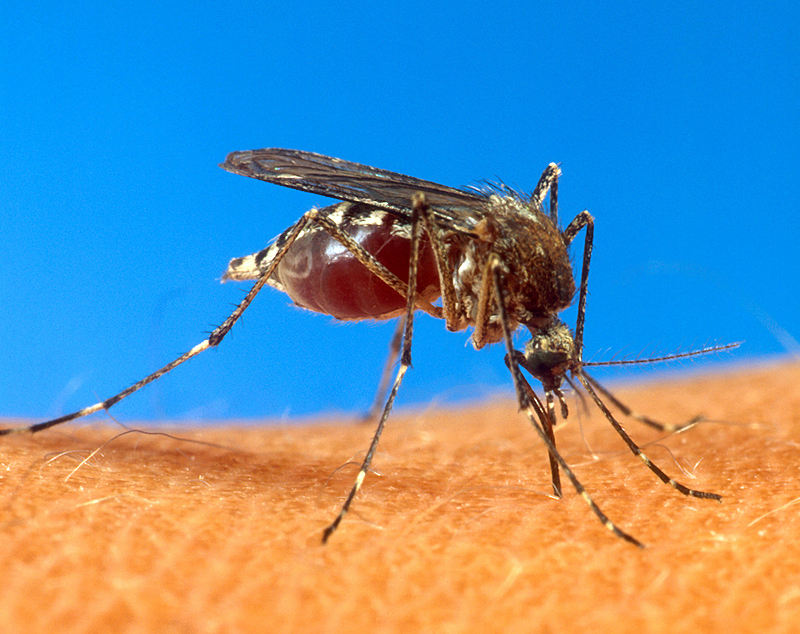 [1]
[1]Mosquitoes transmit the Eastern Equine Encephalitis Virus.
“Although Tennessee has never had a documented human case of EEE, it is important for the public to remember mosquito-borne diseases including EEE and West Nile virus can occur each summer,” medical entomologist Dr. Abelardo Moncayo said. “Fortunately, the prevention measures are similar for EEE and other mosquito-borne diseases.”
EEE kills up to 90 percent of the horses infected. The horse in Madison County did not survive. Although there is no vaccine for humans, the EEE vaccine for horses is particularly effective to protect horses against the virus.
“Horse owners should vaccinate their livestock annually and always watch for signs of illness,” state veterinarian Dr. Charles Hatcher said. “If your horse is lethargic, loses eyesight or is unable to swallow, contact your veterinarian immediately.”
Standing water provides an ideal location for mosquitos to breed. Mosquito control should include “tip and toss” and “drain and cover” to eliminate standing water around the barn and home, and use of mosquito “dunks” to eliminate larvae in water troughs and ponds.
TDH recommends the following to protect people from mosquito bites
- Apply repellants to skin often. These can include lotions, liquids or sprays. TDH and the Centers for Disease Control recommend the use of repellents which contain DEET, Picaridin, oil of lemon eucalyptus or para-menthane 3, 8-diol and IR3535. Duration of protection varies by repellant. Read labels on products to determine when reapplications are necessary for optimal protection. Find the insect repellent that is right for you [2].
- Wear long, loose and light-colored shirts and pants and wear socks. Tucking shirts in pants and tucking pants into socks will help form a barrier. Wear closed shoes or boots instead of sandals.
- Treat clothing with permethrin or purchase clothing pretreated with permethrin.
- In remote locations lacking window screens and/or air conditioning, the use of bed nets is advised. These should reach the floor or be tucked under the mattress.
- Avoid perfumes, colognes and products with fragrances that might attract mosquitoes.
“We encourage Tennesseans to use preventive measures to avoid mosquito-borne diseases, ‘’ Tennessee Department of Health Deputy State Epidemiologist John Dunn, DVM, PhD said. ‘’With ongoing threats like EEE and West Nile virus, and new diseases like Zika virus, it’s important to protect yourself and your family.”
The state veterinarian is responsible for monitoring for and preventing the spread of animal disease, as well as promoting animal health in Tennessee. The office works with private veterinarians, animal pathologists and disease diagnostic laboratories to identify diseases and determine the cause of animal deaths.
The Tennessee One Health Committee [3] seeks to promote, improve, and defend the health of humans and animal species by enhancing the cooperation and the collaboration among the Tennessee Department of Health, Tennessee Wildlife Resources Agency, Tennessee Emergency Management Agency and Tennessee Department of Agriculture.