American Heart Association Rapid Access Journal Report
 Dallas, TX – Knowing the path of a person’s blood pressure from middle age onward may help doctors better assess the health risks posed by high blood pressure [1] and could lead to earlier interventions to prevent stroke [2] and other diseases linked to high blood pressure, according to new research in the American Heart Association’s journal Hypertension.
“We already know that high blood pressure is the biggest risk factor for stroke and that in people aged 50 to 75, it can change in a couple years’ time,” said M. Arfan Ikram, M.D., Ph.D, senior study author and associate professor of neuroepidemiology at Erasmus University Medical Center in Rotterdam, the Netherlands.
 [3]
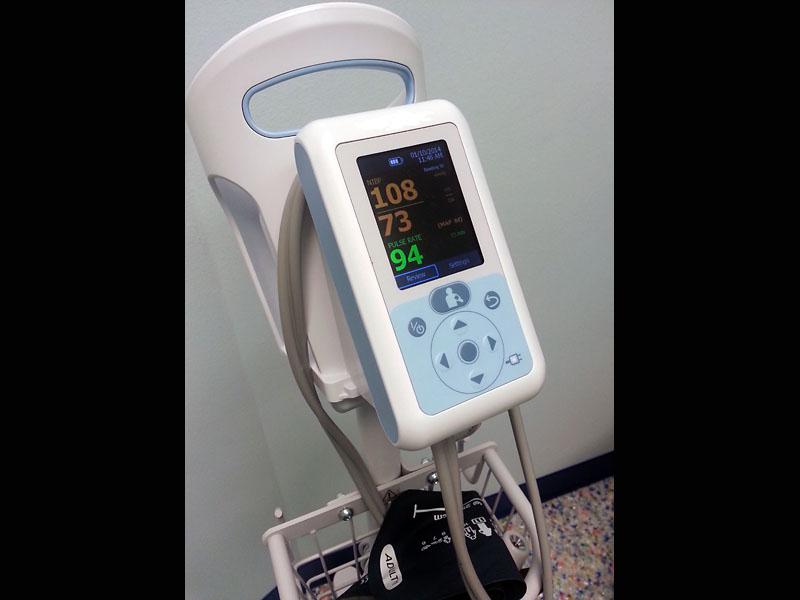
[3]Blood pressure cuff. (American Heart Association)
“Yet, most studies looking at the relationship between high blood pressure and stroke have relied on a blood pressure measurement at a single point in time, rather than looking at the course of blood pressure and stroke risk,” stated Ikarm.
Dutch researchers tracked the systolic (top number) blood pressure [4] of 6,745 participants, age 55-106, living in a suburb of Rotterdam, the Netherlands, for over two decades.
Researchers identified four distinct blood pressure trajectories in people 55 and older:
- Class 1 experienced gradually increasing blood pressure from normal systolic blood pressure (120 mm Hg) in middle age to high systolic blood pressure (160 mm Hg) at age 95. Class 1 was the most common trajectory.
- Class 2 began with normal blood pressures in middle age but experienced a steep increase to very high systolic blood pressure (200 mm Hg) over the same time period.
- Class 3 had moderate high systolic blood pressure (140 mm Hg) in middle age that did not change much over time.
- Class 4 had high systolic blood pressure (160 mm Hg) in middle age, but their blood pressure decreased after age 65. Class 4 were more frequently men and more often used medication.
The study accounted for blood pressure lowering medications, smoking, alcohol use, body weight and other factors that might bias results. After adjustment, researchers found:
- Those whose blood pressure climbed steeply with time (Class 2) and those with high blood pressure that decreased after age 65 (Class 4) had the highest risk of stroke and dying from non-stroke diseases up to the age of 80.
- People with moderately high blood pressure at mid-life and throughout (Class 3), had the highest risk of stroke overall but their risk of dying from non-stroke events, along with those in Class 1, was the lowest.
- Those with normal baseline and gradually increasing blood pressure from borderline-high to high (Class 1) had the lowest risk of stroke and a low risk of death for non-stroke events
During the study period, 1,053 participants suffered a stroke. Researchers also studied the number of deaths that occurred from non-stroke health events. High blood pressure increases the chances of dying from heart attack, heart failure, kidney disease and other diseases.
Authors said that these finding raise questions about caring for patients with high blood pressure and borderline high blood pressure.
[320left]Although large, the study’s population was geographically limited and mostly white. However, Ikram said the study’s take home message can likely be applied to people from other communities:
“Blood pressure should be measured regularly because it can change markedly over the course of a couple years, and put you at high risk for an adverse event, said Ikram. “Since the risk of stroke and death differ across these trajectory paths, they are potentially important for preventive strategies.”
Co-authors are Marileen L. P. Portegies, M.D., MSc.; Saira Saeed Mirza, M.D., MSc.; Vincentius J. A. Verlinden, Ph.D.; Albert Hofman, M.D.; Ph.D.; Peter J. Koudstaal, M.D., Ph.D.; and Sonja A. Swanson, Sc.D.
Author disclosures are on the manuscript.
Support for the study came from the Erasmus MC University Medical Center and Erasmus University Rotterdam; the Netherlands Organisation for Scientific Research (NWO); the Netherlands Organisation for Health Research and Development; the Research Institute for Diseases in the Elderly; the Netherlands Genomics Initiative; the Ministry of Education, Culture and Science; the Ministry of Health, Welfare and Sports; the European Commission; the Municipality of Rotterdam, the Netherlands Consortium for Healthy Ageing; the Netherlands Heart Foundation; and Erasmus MC Fellowship 2013.
Additional Resources
- About High Blood Pressure [5]
- About Stroke [2]
- Follow AHA/ASA news on Twitter @HeartNews [6].
- For the updates and new science from the Hypertension journal follow @HyperAHA [7].