People Urged to Eliminate Standing Water, Take Precautions during Outdoor Activities
 [1]Nashville, TN – The Tennessee Department of Health has confirmed one human case of West Nile Virus this week, the first human case confirmed in Tennessee in 2014.
The WNV case involves a resident of Shelby County who is now recovering.
 [2]
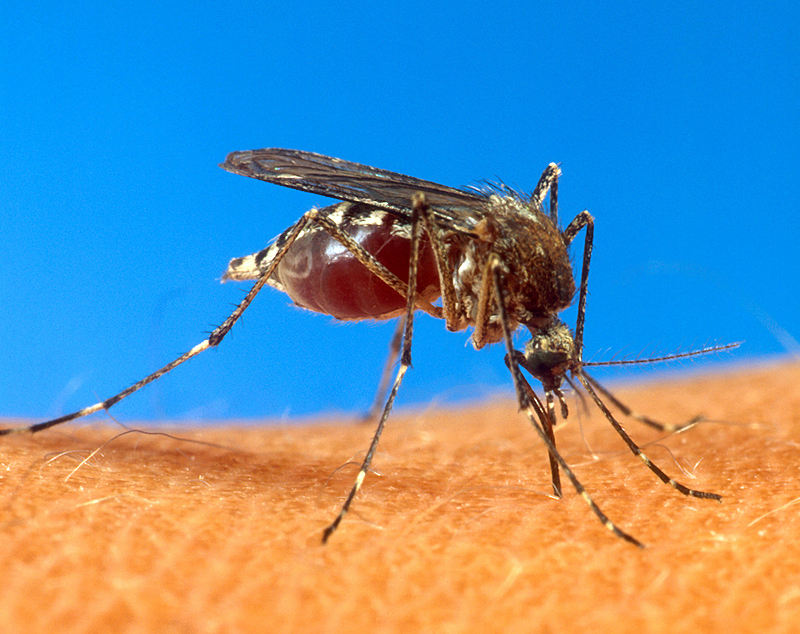
[2]Mosquito populations in Tennessee are at their peak May through October. There is no human vaccine for West Nile Virus; therefore, Tennesseans are urged to take preventive measures to avoid being bitten by infected mosquitoes.
“West Nile has been present in our state since 2001, and along with recent news about chikungunya virus is a reminder mosquitoes can carry disease and sometimes death, just as they did in our historic past here in Tennessee,” said TDH Commissioner John Dreyzehner, MD, MPH. “We know most mosquitoes live their lives and die within a few blocks of the typically stagnant standing water where they were born. Reducing breeding areas is an old strategy we need to bring back to protect our families, neighbors and customers, so in addition to personal bite protection, we urge people across Tennessee to remove standing water around their homes and businesses.”
Mosquito populations in Tennessee are at their peak May through October. There is no human vaccine for WNV; therefore, Tennesseans are urged to take preventive measures to avoid being bitten by infected mosquitoes.
The following tips will help reduce the risk of WNV infection:
- Use insect repellants such as DEET, Picaridin, oil of lemon eucalyptus or IR3535 on your skin, following all label recommendations for usage. Pay particular attention to recommendations for use on children and never apply any of these products around the mouth or eyes at any age. Consult your health care provider if you have questions.
- Certain products containing permethrin are recommended for use on clothing, shoes, bed nets and camping gear. Permethrin-treated clothing repels and kills mosquitoes and other pests and retains this effect after repeated laundering. Permethrin is not to be used directly on skin.
- Do not use perfume, cologne or other scented products such as deodorant, soap or lotion if you’re going outside, as fragrances may attract mosquitoes.
- [320right]Remember “long, loose and light” when choosing clothes to wear outdoors. Long-sleeved shirts and long pants are best, and for more protection, tuck pants into your socks and your shirt into your pants to form bug barriers. Wear loose-fitting clothing to prevent bites through the fabric. Light-colored clothes are less attractive to many insects and may allow you to spot them more easily.
- Eliminate standing water near your home, which can serve as a breeding ground for mosquitoes. Many containers, even those as small as a bottle cap, can hold enough water for mosquitoes to breed.
- Keep wading pools empty when not in use and store them on their sides. Replace water in bird baths weekly and don’t allow water to stand in buckets or barrels. If you have a rain collection barrel, make sure it has a tight-fitting screen on the top.
- Keep windows and doors closed or cover with screens to prevent mosquitoes from entering your home.
In 2013, Tennessee had 24 human cases of West Nile virus, including three that resulted in death.
“West Nile virus has been detected in all lower 48 states, and while we urge all Tennesseans to take steps to protect themselves against it, certain groups of people are more at risk for the most serious forms of illness the virus can cause,” said State Medical Entomologist Abelardo Moncayo, PhD. “People with medical conditions such as cancer, diabetes, hypertension and kidney disease are at greater risk for serious illness from WNV.”
[320left]Mosquitoes become infected with WNV by feeding on infected birds, and can then transmit the virus through their bites. Most human WNV infections are either asymptomatic or mild. Symptoms may include fever, head and body aches, and usually last only a few days. The virus cannot be spread from one person to another.
WNV can cause severe infections, which occur in less than one percent of human cases. These severe infections may cause meningitis or encephalitis and result in high fever, neck stiffness, stupor or disorientation. Severe cases may also cause muscle weakness or paralysis.
Horses can also be infected with West Nile Virus. Tennessee had four confirmed cases of WNV in horses in 2013. Horse owners should be sure their animals are current on vaccinations for West Nile as well as for eastern equine encephalitis, which is also carried by mosquitoes.
For more information on West Nile virus, visit the Tennessee Department of Health website at http://health.state.tn.us/ceds/WNV/wnvhome.asp [3]
About the Tennessee Department of Health
The mission of the Tennessee Department of Health is to protect, promote and improve the health and prosperity of people in Tennessee. TDH has facilities in all 95 counties and provides direct services for more than one in five Tennesseans annually as well as indirect services for everyone in the state, including emergency response to health threats, licensure of health professionals, regulation of health care facilities and inspection of food service establishments.
Learn more about TDH services and programs at http://health.state.tn.us/ [4]