 Dallas, TX – For the first time, guidelines have been developed for preventing stroke in women.
“If you are a woman, you share many of the same risk factors for stroke with men, but your risk is also influenced by hormones, reproductive health, pregnancy, childbirth and other sex-related factors,” said Cheryl Bushnell, M.D., M.H.S., author of the new scientific statement published in the American Heart Association journal Stroke.
 [1]
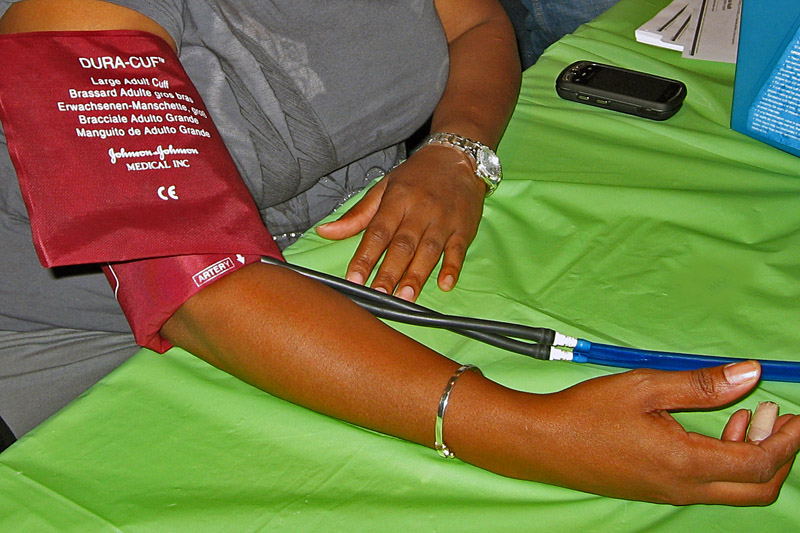
[1]Blood Pressure Check. (American Heart Association)
The guidelines outline stroke risks unique to women and provide scientifically-based recommendations on how best to treat them, including:
- Women with a history of high blood pressure before pregnancy should be considered for low-dose aspirin and/or calcium supplement therapy to lower preeclampsia risks.
- Women who have preeclampsia have twice the risk of stroke and a four-fold risk of high blood pressure later in life. Therefore, preeclampsia should be recognized as a risk factor well after pregnancy, and other risk factors such as smoking, high cholesterol, and obesity in these women should be treated early.
- Pregnant women with moderately high blood pressure (150-159 mmHg/100-109 mmHg) may be considered for blood pressure medication, whereas expectant mothers with severe high blood pressure (160/110 mmHg or above) should be treated.
- Women should be screened for high blood pressure before taking birth control pills because the combination raises stroke risks.
- Women who have migraine headaches with aura should stop smoking to avoid higher stroke risks.
- Women over age 75 should be screened for atrial fibrillation risks due to its link to higher stroke risk.
Preeclampsia and eclampsia are blood pressure disorders during pregnancy that cause major complications, including stroke during or after delivery, premature birth, and risk for stroke well after child-bearing. Preeclampsia is characterized by high blood pressure and high protein levels in the urine, and when seizure also occurs, this is called eclampsia.
[320left]High blood pressure, migraine with aura, atrial fibrillation, diabetes, depression and emotional stress are stroke risk factors that tend to be stronger or more common in women than in men.
More studies need to be done to develop a female-specific score to identify women at risk for stroke, said Bushnell, associate professor of neurology and director of the Stroke Center at Wake Forest Baptist Medical Center in Winston-Salem, N.C.
The guidelines are geared to primary care providers, including OBGYNs.
Co-authors are Louise McCullough, M.D., Ph.D.; Issam Awad, M.D., M.Sc.; Monique Chireau, M.D., M.P.H.; Wende Fedder, D.N.P., R.N.; Karen Furie, M.D., M.P.H.; Virginia Howard, Ph.D., M.S.P.H.; Judith Lichtman, Ph.D., M.P.H.; Lynda D. Lisabeth, Ph.D., M.P.H.; Ileana Piña, M.D., M.P.H.; Mathew Reeves, Ph.D., D.V.M.; Kathryn M. Rexrode, M.D., M.P.H.; Gustavo Saposnik, M.D., M.Sc.; Vineeta Singh, M.D.; Amytis Towfighi, M.D.; Viola Vaccarino, M.D., Ph.D.; and Matthew Walters, M.D., M.B.Ch.B., M.Sc.